Dandelions Close-up

Dandelions Close-up
Dandelions In Black And White

Saturday, June 22, 2013

June 22, 2013

I get requests from people all the time asking if they can use one of my images for their particular project.  I always respond by thanking them for their interest in one of my images.  I then ask, what will the image will be used for.  Once I know what the image will be used for I then can give them a fair license fee.  I usually have to explain the difference between personal use and editorial/commercial use.

I am friendly and appreciative of their interest in my photography and I want them to know that.  So I respond quickly and professionally.  It is important in running a stock business to respond to all stock photo requests no matter how trivial you may think they are, because you never know when a large sale can occur from the smallest inquiry.    


Sunday, June 2, 2013

June 2, 2013


We want to be seen, heard and witnessed. We live in this world longing for companionship, love, a caring touch, our inner music we can share with someone.  Photography gives us that connection to our busy lives, a history of our existence.  Social media gives us a platform to show that history to the outside world.  Our days seem better when we can share our lives with others and have them respond in a positive, sympathetic way, validating our daily grind.


Sunday, May 26, 2013

May 26, 2013


Our family would like to thank all our military families for their service on this Memorial Day.  We will never forget your sacrifices.


May 26, 2013


I find it overwhelming the amount of social media sites that drain any enthusiasm you might have for image creation.  Before I know it, an hour, two hours have passed and all I have accomplished is reading all the inbox notifications that I really don't have to respond to in the first place.  Besides most of them I have to delete anyway because they are spam.  All of this saps my energy and keeps me away from my true goal.  Creating great images and getting them out onto platforms that can sell them to potential buyers.

Making the best use of your time.  Friday we went over to Eastern Washington to get our daughter at college and bring her home for the Memorial Day weekend.  This also gave us a chance to pack up some of her stuff and not have to wait for the end of the year mad dash.  I brought my camera along and was able to shoot a couple of subjects on the way back.  I try and shoot at least one or two times a week. You have to discipline yourself to work at your craft and create new imagery every chance you get.

I have begun uploading some of my images to a print selling website.  I am testing the waters.  What I didn't like was the fact that when I uploaded my first gallery of images I immediately got a like comment from a viewer.  My mind works this way.  Why, when the ink is still wet so to speak did I get a positive comment so quickly.  I feel it was a plant, a person connected to the site, getting the newbie excited.  I have been around the block a few dozen times and I don't need an ego massage.  Anyway we shall see. I am always looking for new outlets for my work and I rarely give up on a potential money making photo site.


Sunday, May 5, 2013

May 4, 2013

Good editors cont...

A good editor will not force his photographers to shoot subjects that they have no interest in just to follow the money train. Without interest in your subjects you will be shooting from a conveyor belt only getting glimpses of your subject.

Good editors will allow the photographers decision to take a photo be at the forefront. His decision to create this image deserves an edit consideration.  

Styles change, technology advances, taste become fads, fads fade, run and gun images explode on the market scene, editors are under pressure to get with it, get hip and join the movement.  But a good editor knows that a powerful image is still the best way to express an emotion that can connect with the audience.  And clients know this too.  Sure, there is alot of new devices that make photography easy and fun but that doesn't equate to quality intent image making.  

A good editor can look at an image submission and immediately know if the photographer took the easy way out in his approach and interest in the scene.  Did he go with the herd mentality and take images from the pedestrian location and perspective and didn't see or dig deeper into the subject and find something of interest, something more personal that expressed his own unique style?  Will the editor, under these circumstances, automatically reject the submission?

The simple answer is NO! A veteran editor will look at a new submission from his photographer and even though it is a scene that has been shot a million times before, will still respect and have confidence that the photographer looked under the surface of the scene and photographed the homogenized subject in a new an illuminating way.


The photographer didn't allow the lure of pedestrian imagery to deter him from finding gems in the rock garden.


Thursday, May 2, 2013


May 1, 2013

What can a Good Editor Do For You?

I find that a lot of photographers who have a good relationship with their stock photo editors blossom under their tutelage and make a better living doing the thing they love to do, create great photos.  I think the reason for this is that they feel more committed to do the real work of photography by first understanding that his/her editor has information that can guide them in producing images that are needed by clients.  And that is key to Stock Photography.  Images that are needed.

Some photographers always have a knack for creating contemporary imagery that will sell.  Especially photographers that are commercial shooters.

A good editor will:

Be honest with you on how the market works.  Give you the low down on the different pricing models RF, RM, RM Exclusive, Micro Stock,  etc...  He might suggest that certain types of images would do well in the Rights Managed arena or in Royalty Free licensing model depending on your volume output and subject matter.

They give their photographers the best advice on where the image market is heading and where you can get the best return on your time, travel and money.

They can help you recognize a style in your work and then push you to expand your horizons which will increase your image base.  As you try different lighting techniques, photograph different subjects, this experimenting builds confidence as you advance through your career.

An editor knows that some image buyers are looking for a certain style, maybe a more straight forward approach to capturing their subject needs. Sometimes an image that was rejected by one editor and picked by another editor sells because the latter saw a clients need being fulfilled.  I have submitted images that were rejected by one editor, but were picked by a different editor/agency and  ended up selling.  I trust my editors to know more than me what their clients needs are.

And finally, the great thing about editors is that they become friends.


Sunday, April 21, 2013


I had someone e-mail the other day asking for more information on a lighthouse image I photographed along the southern Washington State coast.

This wasn't your ordinary e-mail.  The photographer was having problems finding exactly where I took the image.  So he sent me a google map of the area showing in fine detail an overhead view of the lighthouse and surrounding areas.  I was able to e-mail him back, giving him real time info on how far north he needed to go to connect to a back road to get to the trail head and the bluff where I took the photos.

We used to enjoy the ride, finding images and letting serendipity change our shooting schedule and just enjoying the journey of taking images.  Now, you can zero in on any location, anytime and know the exact place you need to stand and shoot from with apps that will tell you where the moon is rising and the sun setting.  If you are on a tight schedule as I believe this photographer was, then the new location finding apps could be well worth it.  But, sometimes you must get off the beaten path to find your own personal imagery.


Saturday, April 20, 2013

April 20, 2013

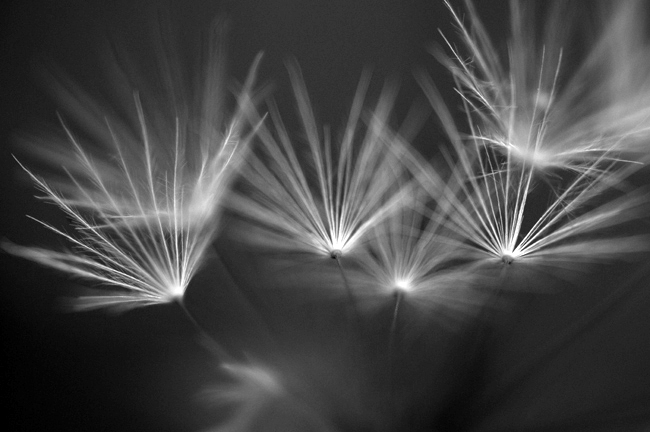
Dandelion or Irish Daisy

Just the name dandelion brings out an automatic negative response from people.  But why is that?  In photography we shouldn't allow previous influences to determine a potential subject or eliminate others as not worthy of our time and effort.

Is a dandelion a weed to be scorned or a flower to, be embraced.  It is both.  The dandelion greens have a lot of medicinal purposes.  The dandelion is high in calcium, rich in iron, loaded with antioxidants, and is rich in protein.  Native cultures through recorded history have used the dandelion as food, and as a healing herb.

Today we make dandelion wine and dandelion coffee.

The problem with dandelions is its ability to rapidly colonize the soil. This quick infestation damages crops worldwide and causes significant economic damage. So we can see that there are minuses to any plant that spreads quickly and overwhelms a cultivated field.

But I think one of the greatest complaints from people when it comes to the dandelion is when the flower attacks a pristine, green, manicured lawn.  We take comfort in our structured well kept residential lawns as a symbol of our ability to control nature.  When an alien weed such as the dandelion begins to take hold, we freak out and use all sorts of chemicals to kill the surly beast.

I prefer to look at dandelions as great photo opportunities.  I will not allow a negative connotation to keep me away from exploring any potential subjects.


Sunday, April 14, 2013


Reflections on Photography

Photography has a interesting way to describe what it does.  When I say to someone, that I am going out shooting this weekend, they look at me as if I have gone off my rocker.  Or they say, what gun range are you going to.

Or someone would ask me if I got the shot?

In the old days we would get together and discuss our negatives.  Some people would respond, "Jim I don't think you have many negatives" ??  While looking at me funny.

We would talk about scratching on the film not an itch.

We used to go into a photo lab to blow up the image.  Nowadays if you talked about blowing something up you get arrested.

We talk about capturing an image.  As if we are stalking  prey.

There are more quirky expressions but they escape me at this time like some images I missed.


How do you protect your business interest in this crazy giveaway of the Stock Photo market? Do you shoot hi-demand lifestyle imagery?  Are you finding yourself constantly sleep walking through your shoots?  Can you ever keep up with the proliferation of imagery that hits the web on a second by second basis?

I find that I enjoy and have an interest in shooting a variety of subjects.  For me it doesn't matter if it is a studio concept shot or a close-up of a lady bug.  I enjoy photography period. By shooting a variety of subjects I don't put all my eggs in one basket but keep my portfolio open to a variety of potential clients.  Nowadays a photographer has to be aware that imitators are all over the world and a subject that sells will be copied and exploited.  You have to keep looking and shooting new work and personal work to keep your creative juices flowing.

This doesn't mean that you shouldn't photograph a subject in depth and become an expert on the subject you are shooting.  By having in depth coverage of a subject you will get a valuable reputation and clients will come back to you for more images because they trust your ability to know the subject and have detailed information attached to each of the images that you send them.  But I think nowadays it is important to branch out and shoot a variety of subjects and just maybe create another niche for your photo income.

I enjoy shooting abstract images and patterns.  I am always looking for nature's patterns or patterns that I create in the studio.


I had some left over paint from another photo shoot I was doing so I decided to drip paint on my subject and to my surprise the paint didn't adhere to the surface of my subject but instead peeled away from it and created unusual colorful patterns.  I was in photo heaven.


Sunday, April 7, 2013

April 6, 2013


Photography is paying attention.  I enjoy the moment better because I am paying more attention to the details and not being distracted by external forces. When you pay attention you will find yourself looking deeper into the scene, subject and light. 

Your Photography is better when you have an interest in your subject.  Wanting to take images of your subject is a lot better than being bored and just going through the motions.  Photography shouldn't take away from your interest in your subject it should enhance your interest and make you more willing to take your time and explore the scene.  For me, photography enhances an experience of environment not distract from it.  With interest your images will be better.  

Do you go out looking to capture imagery or do you go somewhere and bring your camera along just in case something interests you?  I don't travel and then shoot.  I think about what I want to shoot before I travel.  Of course it never works out exactly as planned and that is the beauty of an empty memory card, so many possibilities.

The unexpected moment is why we love image making.  Let go and just take the photo, don't think.  We have all experienced moments where we just pushed the shutter and didn't even think about exposure, composition and light.


Saturday, March 23, 2013

March 23, 2012


In the late 80's I went down to the American Southwest with a photographer friend who was showing me places he had visited the proceeding year. One particular subject always stood out in my mind and that was Antelope Canyon on Navajo Land near Page Arizona. My friend and I had to walk a mile or more to get to the Upper Canyon and when we got there a large bull was guarding the entrance.  He was looking for shade and wasn't going to give up his spot easily.  Eventually the bull moved on and we entered the slot canyon.  The light was amazing and I felt like we entered some ancient ruin and the stillness in the air was like a silent prayer to the spirit gods.


Sunday, March 17, 2013

March 17, 2013


Photography is a paradox of technique and style and purpose.  When we enter photography, I feel it is important to learn your skills from beginning to end (it used to mean in the old days loading your own film, processing the film, printing the negative and then displaying it for critique).  Now, it is learning the cameras functions. Put your camera on manual and do tests to understand how your meter functions under different lighting situations.  Play with all the bells and whistles on your camera to see if there are any options that could be used to improve your image results.  Study composition and discover why good photographs attract attention.  How did the photographer find the subject and use light and composition to make a quality image. 

We have a tendency to get in a rut when we photograph and we end up playing it safe and setting the camera controls the same no matter what subject presents itself to us.  One of things that I emphasize in my shooting is to be prepared but also be open to the opportunities that present themselves.  Preparation is done before I get to my destination.  This could be as close as my back yard and shooting frost close-ups on leaves or spider webs.  

Preparation is knowing your lenses and camera controls and planning ahead, a starting point in your shooting.  This starting point is just that a start.  Next, it is to shoot a few frames and begin to get into your subject.  Your mind begins to see new and unexpected details or compositions that look interesting.  You begin to open up to your subject and let your subjects true nature, as you perceive it, reveal itself to you.   I have never photographed a subject that didn't surprise me in some way.   All subjects  reveal something unexpected to the photographer that is paying attention.  And that is the paradox I was talking about in the beginning.  You prepare, you have your own style and then serendipity places you in a whole new relationship to your subject.  You are no longer worrying about your exposures and shutter speeds because you are acting intuitively and on a deeper subconscious level making adjustments to fit your interpretation of your subject.  You start in one direction and end up miles away in another more open purpose.  Your purpose now is not to limit your exploration but to broaden it.  You begin to let go of your dogmas and respond to your subject naturally and creatively.     


Sunday, March 3, 2013

March 2, 2013

In order for imagery to be meaningful it has to have content with purpose.  Light, technique, composition, insight, intuition, patience are all very important as you look for subjects to photograph.

Edward Weston said, "Good composition is only the strongest way to see the subject.  It cannot be taught because, like all creative effort, it is a matter of personal growth".

Images taken randomly and at a shallow level of consciousness can become frivolous.  You must try and attach the subject you are photographing to and experience whether it is emotional or physical,  whereby the viewer understands your passion for your subject first hand, simply and without confusion.  Pay attention to the details in your photo that interfere with your intent. Don't be in a hurry to move away from an interesting scene.  Soak it in, look deeper, experiment with composition, with exposure, think about shooting vertical and then horizontal. Take notes about where the sun is in relation to your subject, would a sunrise or sunset be better and would that make the image more dramatic. Maybe find out when a full moon is coming and plan a shoot around that.  Good image making takes patience, planning and purpose. Finally seeing your subject with fresh eyes for the first time, the equivalence (Minor White) to your feelings manifested in external nature creates an image to be shared with pride.


Monday, February 4, 2013

February 2, 2013


I was mentioning, awhile ago, photographers that shoot random images without purpose and then use special effects filters/photoshop to change the look of the photograph to give it a new quality without depth of meaning.  I think this was a little too harsh because when you are young in the photo making business you have to experiment and try new things to find that style that fits your inner personality.  Not the social you which is full of itself but the reflective you that wants something more powerful and meaningful from your imagery. We need to grow and make changes in what and how we shoot.  What I was referring to is the shooter that allows special effects to add an an unnecessary layer to an already forgettable subject.  If you are open to your environment and not locked into a shallow repetition of the ordinary, if you look deeper and react quickly to the changing light and make an effort to see your subject with new eyes then your images won't need and extra layer of ego.