Dandelions Close-up

Dandelions Close-up
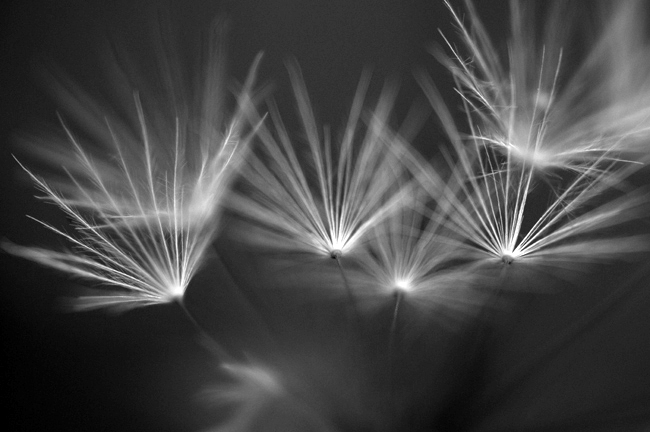
Dandelions In Black And White

Saturday, August 31, 2013


September 1, 2013


I have posted before about the fun we have creating our haunted Halloween porch.  Last year, I had a hard time coming up with an idea for how I was going to create a humorous image of the carved pumpkins we used on the steps leading up to our mysterious and scary porch.  Here is what I came up with.                                                    

                                                       Pumpkin Escape


Halloween Images from 2012


Sunday, August 25, 2013

August 25, 2013


I have often wondered about the camera being a crutch to suspend fear when shooting subjects that are intense.  We lift the camera to our eye, meter, compose and shoot.  All the while there is an activity happening in front of us but the camera is a filter, a barrier that allows us to remain objective and not to think too much on the drama unfolding before us.  We are in a sense, disconnected from the reality we are photographing.  The scene becomes more manageable this way and we have what seems like more time to reflect and act as if a play were being performed and we are in the audience.

I was up in a small airplane last week and was photographing aerial images around Seattle. In order to shoot photos from this airplane we had to open the canopy 8 to 12 inches while in flight.  The big question was, would the air current push the canopy open more and expose us to real air turbulence and an early landing?

When shooting from a small aircraft I shoot at the fastest shutter speed possible.  In this case, I pushed my ASA and made images using a shutter speed of 1/1000 of a second.  I used a 105mm and 50mm lens with hoods.  This cuts down on side glare as the sun sets.  I kept my arms and hands away from touching any part of the plane to cut down on vibrations that could blur my images.  My pilot was great and did a good job turning the plane so I had a better angle to make images of my chosen subjects.  One of the hardest things was keeping the right distance from the opening and sides of the canopy.  Too close to the opening I had wind turbulence, too far away and I had the canopy edges cutting into my frame.  It took awhile for me to get in a groove and maintain a good shooting distance.

I started off talking about the camera as a barrier from experiencing a intense situation.  I do not like to fly!  Having the camera in this case wasn't as much a barrier but a mechanism that allowed me to remain objective and focus on my composition and exposure.  I still experienced the fear and excitement of the flight, but because I was shooting, I was able to enjoy the moment without over thinking of my fears.  If the camera ever became such a crutch that it didn't allow me to experience  the real world I was photographing live, I wouldn't pick up the camera at all.


Saturday, August 17, 2013

July 29, 2013


Are we settling for casual imagery as the new substitute for images that touch a nerve in us and make us think and react in deeper ways?  A great photograph communicates an underlying connection to all humanity, it articulates a purpose, exposes a wrong or instills in us a love for our fellow human beings.   A great image is not just a localized smile or hands up in the air dancing.  We love to imitate because it is fun to be part of trends.  Social media's ever growing control on the image process and distribution makes it easier for us as photographers to play to the masses and not to our own inner voice.  Our everyday lives are broadcast over the Internet to others, exclaiming that I am here, look at me and see what I have done today.  We are like Pavlov's dog getting up each morning and checking our e-mails and social media sites.  We have to see what everyone else is doing and then we have to respond and make our voices heard in words and imagery.  It is addicting but it is it really communicating?

A great image expresses a true deep sense of the subject and what the photographer felt when he made the image.   This feeling can be shared with others through the common good/morals we all try to live by. A great photo can effect us in a profound way if we as the viewer are mind present and really looking at the subject and not letting our minds wonder over to the next local news trauma of the day.

I believe we are seeing a moving away from imagery of depth and powerful emotions to a more lazy approach to image making.

There is this casual/shallow quality to content now.  A willingness to just be there and shoot and what ever happens happens and those images will be marketed as authentic because we are being conditioned to see the world only as a quick expression and not on a deeper level with meaning and purpose.

We must slow down our visual overload.  This tsunami of images and words is numbing us to be more apathetic to a bigger picture of the world we live in and we are not creating worthy imagery but hoarding stuff that ultimately is meaningless.  We have to and should live life on a deeper level than this constant need for attention, any attention.  This need to be seen is pushing us to do and say more and create more careless stuff.. and this in turn is causing more people to become indifferent to any quality in life.

Slow down your life.  Slow down your creativity when making images.  What does all this flood of information have to do with your life.  This minutia of details bogs down your thinking process. We don't have to be everything and take images of everything.   You can limit your social media intake and be more selective and purposeful in your image creation.


Wednesday, August 7, 2013

August 7, 2013


I am in the process of editing, cropping and spotting images.  It is a never ending battle to get new work out into the world and yet live a family life.  This close up image of a maple leaf reminds me of why I love macro photography.  Macro photography is analogous to an inner dialogue physically manifested.  When I saw the Japanese Maple tree I new their was an image present.  I took some images further back but something wasn't clicking.  I moved closer to the subject and began to see details lining up.  As I moved tighter and closer to my photo goal this image presented itself.  My inner dialogue didn't allow me to just shoot an over all scene and move on.  I was mentally present and listened to my inner voice and created this image.

This was a very difficult image to take.  When you are shooting close to your subject any wind or breeze plays havoc with your focus.  In this image I needed both the dew drop and leaf to be sharp.  I had to twist and turn my body to get in a position so that the upper leaf and the dew drop was on a parallel plane for focusing.  And I had to make sure that the background enhanced the main subject.  Many, many frames later I hit the jack pot so to speak.  I think my sore back was worth it.


Monday, August 5, 2013

July 27, 2013


I like getting up early for sunrise.  It sets the direction of the day on a good path.  I decided to drive down into the Snohomish Valley.  Timing is such a intricate part of photography. We sometimes miss out on the potential for great images by not making an effort to just get out and do it, make photos.

If you are driving down Highway 9 heading south as you get closer to the City of Snohomish you can get a glimpse of the valley floor.  Here you will see whether your choice of possible subjects was worth it. This morning the fog sat low over the fields.  At these moments you have a rush of excitement because the potential is there for good images.  I drove along the South West road that winds along the valley floor.  This road is elevated so at times you can be alittle above the fog.  Beware, always drive slower and keep one eye on the road at all times you never know when a working farmer will be out on the road with his tractor or a raccoon hurrying home for the day.  That advice has saved me many times.

As I was driving I kept seeing potential images but I was looking for that aha moment when all the elements come together to make a great image.  Well, it looked like I was going to have to work for any good photograph.  As I passed an opening between a line of bushes and a farm house I spotted a row of electrical towers standing in low lying fog and moving off into the distance toward the Cascade Mountain Range.  Sentinels of our communication obsession.  So I pulled over and set up.  I used a variety of lenses to get the best composition I could given my limited area that I could shoot from.  Once I went through my normal routine of choosing wide, medium and telephoto lenses I realized that I had milked this particular scene.  And my interest here was done.  So I packed up and moved down the road.  As I passed another barn I saw a dirt road that went down into the valley and believe it or not, it didn't have a no trespass sign on the entrance.  So I went down the road and parked.  I took some images of the fog and sunrise behind a large tree and then as the sun rose higher in the east sky I hiked further down the road and found a community vegetable patch.  I stayed and photographed it for a long time shooting the different vegetables people had planted and taking images of some of their tools and large water containers they had set up.

We start in one direction and end up in another.  In a matter of a couple of hours I was able to see the beautiful valley fog and shoot some interesting subjects along the way.  If someone would have told me that when I started out this morning that some of my favorite images would be of a community veggie patch in Snohomish Valley I would have been surprised.  But that is why we seek out good images and let our instincts and luck sometimes take charge and guide us to interesting subjects that were not even on our photo radar..


Friday, July 26, 2013

July 27, 2013


I went to see the United Indians of all Tribes annual celebration last weekend.  What a great time.  The Native American traditional clothing was amazing.  There are some etiquette tips to keep in mind if you happen to be at one of these beautiful celebrations.  Ask first before you take a picture of the performers.  Some performers don't want their picture taken while others welcome it.  I guess the main etiquette when photographing people is to be friendly and respectful and when necessary ask before you leap.  During the Grand entry stand and remove your hat.  Don't pick up any feather that has fallen to the ground, ask one of the staff to pick it up and return it to the owner.  Don't block others from viewing the tribal dancing.  I like to sit or kneel in front of a standing crowd, that way no one gets irked and frustrated with me.

When you are taking photos look at the background as the Tribes circle and dance in front of you.  Try and position yourself in an area where the background is neutral and won't distract from the colorful clothing.   If it is a sunny day photograph with the sun behind you.  This way you won't have your subject in deep shadows.  Use a fast shutter speed to stop the subjects movements.  Capturing the facial expressions can be very powerful.  You will need to use a longer lens.  I brought a 105mm lens plus shorter lenses but next time I will also bring my 180mm lens so I can get a tighter close up of the traditional clothing and face painting of the dancers.  I will also experiment with slower shutter speeds for movement and color when using the longer lens.  I will pan with my camera following the dancers as they move though the frame.  You will have to decide how abstract you want to take your final image.

It was very powerful and impressive to see the Native American Tribes parade into the dance circle with the drums beating and the voices chanting keeping their culture alive and well.


Sunday, July 21, 2013

July 21, 2013


I like to make photo lists and cut tear sheets from magazines and list potential concept shots that I want to work on.  This list expresses for me a certain amount of interest in these subjects.  I have a curiosity to explore their potential.

When we go out to shoot, (even if we have a tight list of potential subjects) we are always looking for serendipity to play a roll in our ability to create a better image.   

When we get to our location we find many things that will interfere with our image making goals.  The terrain is not what we expected, it is the wrong time of year, the light is too contrasty for your image goal, it is stormy, time of day is wrong, you're thinking to much about an argument you had with your companion, your interest is waning etc...

This invariable leads to a doubt of your subject choice.  We are always thinking of someplace with better opportunities.  Our time is precious and we can't just sit and wait.  This is not the nature of man.  We are impatient to the detriment of our ability to create great images. Our minds want it all and we don't want to work hard to get it. So we start to doubt our location and the image goals we set for ourselves.  Maybe we should move to a new, better location and see how the light is there and not have to waste time in this location where nothing is working for me to get a great image.

But if we wait and look at the scene before us and are patient, the subject will reveal worthy images to us.

The real issue is light and subject.  We all wish for better imagery.  What makes better images is dramatic light, dramatic subject and composition and the relationship the viewer has with those choices you made to create that image.

But how realistic is it to have every element line up so that all you have to do is step out of your car, set up your tripod, click the shutter and then move on because you have captured that perfect dramatic image.  Or better yet, why even get out of the car, set your ISO at 400 and shoot the scene while keeping a consistent speed of 60mph. 

What stops you from experiencing the true revelations of this world? 

Over thinking can be a barrier.  It becomes a process of abstraction leaving you unprepared to experience the here and now, the deep beauty that lies in front of your eyes just within your grasp, if only you would open those eyes and see, really see what is in front of you.  

Any layers you put between you and your subject can dull your perceptions. Doubting yourself and your image intention is one of those barriers.

These layers can hamper your ability to see old as new again. You are blinded by image stereotypes and mundane self observations to see your surroundings you walk by every day as subjects worthy to photograph.  Get out of your box and notice and see the new subjects (that were always present) of beauty that abound right in front of you. 

Once you have opened your eyes to a new world of wonder and possibilities it is time to express your new found observational skills.

Any place you choose to shoot from has the potential for great imagery.  It is letting go of your inner barriers and just open your eyes. Take in the light, its quality, direction, its motifs.  

What is illuminating this scene that has finally caught your attention? Now that you see it, will you be able to make an image worthy of your seeing.  Can you make a transition of seeing the subject in only one way to seeing your subject in many different lighting situations.  Maybe this overcast light is good for less contrast, maybe this harsh sunlight is telling me to wait for sunrise or sunset light, maybe using a different lens and getting low to the ground will bring the viewer suddenly into your new perspective and a connection will be made.

Take in the light and the paradox of timing and being there. 

How many times have photographers found the perfect spot to shoot their subject from only to have the light fizzle and their patience tested.  And how often is the opposite true, you are in a bad lighting situation but you have had the patience to wait , knowing that if the light breaks through you will have a dramatic image and suddenly the light comes and this beautiful light hits your subject and all is good and your rewarded with great images.

Trust your instincts.


Saturday, July 13, 2013

June 23, 2013


I was shooting at Queen Anne Hill a few weeks ago at Kerry park.  This park has one of the most iconic views of the Seattle Skyline.  You get all the beauty of the city with the Space Needle and the downtown corridor and Mount Rainier as a back drop.  You also get the Seattle waterfront with the new Ferris Wheel and Ferry boats leaving and coming into the city as the sun sets on a warm summer evening.  It is truly magical.  It was packed with photographers and tourists visiting from other cites.  Tour buses will pull up and crowds of people will get out and come and stand with us (photographers) and take quick photos of the city and then leave for the next tourist destination.

What made this day even more special was the Moonrise.  During the summer months the moon moves south along the earths horizon line while the sun moves north.  Because of this, you get a perfect storm of sunset light reflecting off the glass buildings and a moonrise that will go over the city at twilight. What fun.

I got there early knowing it was going to be packed. I brought an extra tripod to put up next to my working tripod to save a place for a photographer friend that was going to be late.

I do make the effort to update my image files with the newest Seattle skyline imagery. I still make some sales of these images. But not as I once did, in the heyday of Stock.  There are just too many images being taken at any given moment to make it a worthwhile, constant job to concentrate on skylines only or any subject that is easily accessible. This doesn't mean you don't shoot these subjects but you balance shooting with markability, interest and light.


Saturday, June 29, 2013


June 29, 2013

I have to ask myself if some of the older generation of photographers are upset about their ego's being bruised by a new wave of imagery being presented by an ever younger generation of shooters?  There is paradigm shift from a knowledge based art-form to a new manufacturing model, replacing the older photographer's concepts of image creating.  The learning curve for new photographers is becoming shorter and shorter.  Cameras are put on auto pilot and selling imagery has never been more efficient.   What this means to the older generation of shooters is that it takes less time to become capable of producing a usable image.  And with new smaller high pixel range finders and cell phones the amount of imagery being produced is mind boggling and scary if you plan on making a living in the future taking photos.

Small camera photography is the big attraction for amateurs and professionals alike. Today, you shoot on the fly and don't necessarily care about having a picture perfect image. As a matter of fact having an image that is real with flaws is exactly what the new breed of editors are looking for.  In the old days Stock Photography was a glamour magazine.  Picture perfect imagery that entices it's viewer to travel to these beautiful locations and see for themselves how they could have it all by just stepping off the plane and missing all those piles of crap. But now people want more of the nitty gritty, a real life experience. 

Downsizing to a smaller camera just makes since for this very reason. Let me give you a few examples of why a small camera is useful in some circumstances. It seems wherever I go,  I am asked if I am a professional photographer ( I admit sometimes I carry alot of gear).  I normally say no, I am an amateur and I just enjoy taking photos.  If I were to say yes it could open up a whole can of worms.  For one thing I might have to answer alot of questions that are distracting me from why I am there in the first place, to take photos.  Secondly you never know who this person is and maybe the subject you are shooting is somehow restricted and you might need a permit or permission to take pictures.  But by being a gullible amateur just having fun more often than not you get the images and move on.  

By shooting with a small camera you can take photos anonymously,  especially when you are shooting in foreign lands or in sticky situations here at home.  Why would you draw attention to yourself by having big lenses and a motor drive humming away when that could get yourself arrested.  By keeping a low profile you are able to get a more intimate portrait of the scene.  That's a bigger reward than showing off your latest and greatest. Small cameras beg to be shot from the hip with no set up time because you want capture the action when it is happening at break neck speed.

Another plus is sparing your shoulder and back the heavy weight of your photo gear.  Small camera's are easy to carry and have ready at all times.  I know we all have been there and saw a spectacular scene unfold before our eyes but didn't have our camera with us.  But now you have no excuse for not getting the image.  

Ultimately it is not whether you are a novice or professional, use a big camera or a small camera what matters is quality imagery.

If a photographer approaches a scene with reflective intent and finds a purpose present in the subject then the image will be a success no matter his age or his camera preference.


Saturday, June 22, 2013

June 22, 2013

I get requests from people all the time asking if they can use one of my images for their particular project.  I always respond by thanking them for their interest in one of my images.  I then ask, what will the image will be used for.  Once I know what the image will be used for I then can give them a fair license fee.  I usually have to explain the difference between personal use and editorial/commercial use.

I am friendly and appreciative of their interest in my photography and I want them to know that.  So I respond quickly and professionally.  It is important in running a stock business to respond to all stock photo requests no matter how trivial you may think they are, because you never know when a large sale can occur from the smallest inquiry.    


Sunday, June 2, 2013

June 2, 2013


We want to be seen, heard and witnessed. We live in this world longing for companionship, love, a caring touch, our inner music we can share with someone.  Photography gives us that connection to our busy lives, a history of our existence.  Social media gives us a platform to show that history to the outside world.  Our days seem better when we can share our lives with others and have them respond in a positive, sympathetic way, validating our daily grind.


Sunday, May 26, 2013

May 26, 2013


Our family would like to thank all our military families for their service on this Memorial Day.  We will never forget your sacrifices.


May 26, 2013


I find it overwhelming the amount of social media sites that drain any enthusiasm you might have for image creation.  Before I know it, an hour, two hours have passed and all I have accomplished is reading all the inbox notifications that I really don't have to respond to in the first place.  Besides most of them I have to delete anyway because they are spam.  All of this saps my energy and keeps me away from my true goal.  Creating great images and getting them out onto platforms that can sell them to potential buyers.

Making the best use of your time.  Friday we went over to Eastern Washington to get our daughter at college and bring her home for the Memorial Day weekend.  This also gave us a chance to pack up some of her stuff and not have to wait for the end of the year mad dash.  I brought my camera along and was able to shoot a couple of subjects on the way back.  I try and shoot at least one or two times a week. You have to discipline yourself to work at your craft and create new imagery every chance you get.

I have begun uploading some of my images to a print selling website.  I am testing the waters.  What I didn't like was the fact that when I uploaded my first gallery of images I immediately got a like comment from a viewer.  My mind works this way.  Why, when the ink is still wet so to speak did I get a positive comment so quickly.  I feel it was a plant, a person connected to the site, getting the newbie excited.  I have been around the block a few dozen times and I don't need an ego massage.  Anyway we shall see. I am always looking for new outlets for my work and I rarely give up on a potential money making photo site.


Sunday, May 5, 2013

May 4, 2013

Good editors cont...

A good editor will not force his photographers to shoot subjects that they have no interest in just to follow the money train. Without interest in your subjects you will be shooting from a conveyor belt only getting glimpses of your subject.

Good editors will allow the photographers decision to take a photo be at the forefront. His decision to create this image deserves an edit consideration.  

Styles change, technology advances, taste become fads, fads fade, run and gun images explode on the market scene, editors are under pressure to get with it, get hip and join the movement.  But a good editor knows that a powerful image is still the best way to express an emotion that can connect with the audience.  And clients know this too.  Sure, there is alot of new devices that make photography easy and fun but that doesn't equate to quality intent image making.  

A good editor can look at an image submission and immediately know if the photographer took the easy way out in his approach and interest in the scene.  Did he go with the herd mentality and take images from the pedestrian location and perspective and didn't see or dig deeper into the subject and find something of interest, something more personal that expressed his own unique style?  Will the editor, under these circumstances, automatically reject the submission?

The simple answer is NO! A veteran editor will look at a new submission from his photographer and even though it is a scene that has been shot a million times before, will still respect and have confidence that the photographer looked under the surface of the scene and photographed the homogenized subject in a new an illuminating way.


The photographer didn't allow the lure of pedestrian imagery to deter him from finding gems in the rock garden.


Thursday, May 2, 2013


May 1, 2013

What can a Good Editor Do For You?

I find that a lot of photographers who have a good relationship with their stock photo editors blossom under their tutelage and make a better living doing the thing they love to do, create great photos.  I think the reason for this is that they feel more committed to do the real work of photography by first understanding that his/her editor has information that can guide them in producing images that are needed by clients.  And that is key to Stock Photography.  Images that are needed.

Some photographers always have a knack for creating contemporary imagery that will sell.  Especially photographers that are commercial shooters.

A good editor will:

Be honest with you on how the market works.  Give you the low down on the different pricing models RF, RM, RM Exclusive, Micro Stock,  etc...  He might suggest that certain types of images would do well in the Rights Managed arena or in Royalty Free licensing model depending on your volume output and subject matter.

They give their photographers the best advice on where the image market is heading and where you can get the best return on your time, travel and money.

They can help you recognize a style in your work and then push you to expand your horizons which will increase your image base.  As you try different lighting techniques, photograph different subjects, this experimenting builds confidence as you advance through your career.

An editor knows that some image buyers are looking for a certain style, maybe a more straight forward approach to capturing their subject needs. Sometimes an image that was rejected by one editor and picked by another editor sells because the latter saw a clients need being fulfilled.  I have submitted images that were rejected by one editor, but were picked by a different editor/agency and  ended up selling.  I trust my editors to know more than me what their clients needs are.

And finally, the great thing about editors is that they become friends.