Dandelions Close-up

Dandelions Close-up
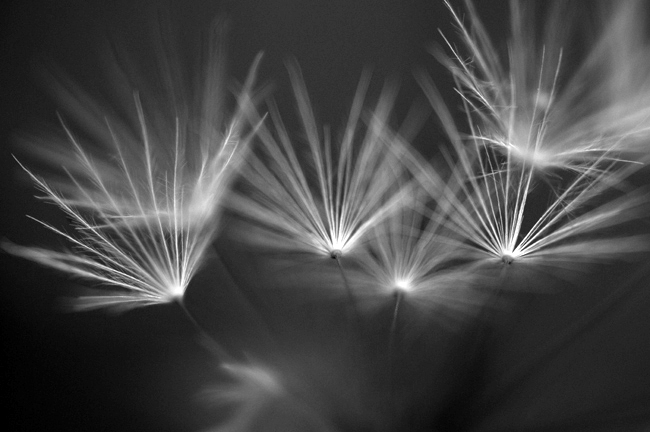
Dandelions In Black And White

Friday, October 21, 2011

City Skylines

October 21, 2011


I have always enjoyed photographing skylines, whether it was Seattle or any other West Coast City Scape.
The trick to shooting this subject is finding that perfect place where the iconic local attraction meets with your creativity and camera knowledge.  If you haven't been to a particular city before then you will have to do some scouting.  Yes, you will find the usual tourists traps and you will want to shoot these subjects too but you will want to put your own personal artistic perspective on it as well.  What I look for when shooting skylines is first and foremost light and then, will my composition give a true sense of the place where even the locals will say, WOW.  Every once and awhile I achieve that mark. I use a tripod on all my skylines and stay away from special effect filters.  Straight shooting does the trick for me. I shoot sunrise and sunset light most of the time.  There are times when the air is clear and the sky this unbelievable blue that I can't resist taking daytime images of cities and their attractions.    


Sunday, October 9, 2011

Out My Backdoor

October 9, 2011


One of my photo buddies was working down at the Grand Canyon as the Park Department's official photographer years ago.  He was in photo heaven.  One day he was sick and in bed and he looked out his window and he saw these wonderful cumulus clouds in a perfect blue sky.  Well, he forced himself to get up and set up his 4X5 and shoot them out his back door.  He took 2 frames and went back to bed.  As it often happens in stock photography those simple, easy images to make become best sellers and the cumulus cloud image he took was one of his all time big money makers.  I have always remembered that, it doesn't always have to be an elaborate set up shot that can make you money sometimes keeping it simple can do the trick.  I often now step out on to my back deck (at all times of the day) to take cloud images when they look good.  And sure enough some of these have sold.  Not huge amounts but enough to keep me shooting these subjects ever chance I get.


Saturday, September 24, 2011

Recession Images

September 24, 2011

I bought some small piggy banks and a couple of larger piggy banks a few years ago before the Great Depression.  I was thinking about the economy and how people would need to start putting money back into savings and into other safe investments.  I was going to shoot a family of pigs with the parents, so to speak, teaching their little pigs to save and invest in their future.  I never got a chance back then to shoot them with that concept in mind.

Fast forward to today's economic fiasco.  As I was looking for new concepts to shoot I remembered the little pigs and thought about the state of the economy and the hardships the Great Recession has wrought on the working class and the working poor, so I decided to shoot these family of pigs with a vision of society where the older generation will have more wealth and the younger generation will have less and will suffer for decades for the greed and dysfunctional government that rule them.


Monday, September 5, 2011

Times are a Changing

August 5, 2011


Photographers must have a business plan and have the where with all to change that business plan as times change.  There is no doubt that times are changing fast in the photo industry and one must be agile and have the dexterity to change directions when needed.  Once upon a time in the Stock Photo World of the Past many photographer's let there images do the talking.  They obviously had the talent to create great images and didn't necessarily have to continually promote themselves as a Stock Shooter or even have to go after assignment work (even though some photographers were natural salesman and would always promote themselves).  They were free to focus on what excited them and then shoot it and submit to a Stock Photo Agency and then watch the income roll in. Nowadays imagery gets lost in the over saturation, over competitive market of shooting Stock Images. Where once your imagery had a waiting audience ready to buy your travel, nature, people and landscape subjects through your Photo Agency, now that audience is getting there imagery from a wide variety of sources and getting connected with photographers on social networking sites.  You have to stay informed and participate in the new directions photography and the business world is going or your imagery will not be seen and purchased and you will not survive in this iapps instant communication posting connectivity culture we are becoming.


Saturday, July 23, 2011

Creativity

July 12, 2011


What is creativity?  Is it when, as a child we could entertain ourselves with the simplest of objects?  I have a friend who's daughter makes snakes out of packaging peanuts.  Then she colors them, then names them, and finally puts them in their own little home, which is a mailing box.  Is it seeing something others don't? Is it having a certain talent that seems to come naturally to you?  Or a talent you had to nurture and work hard at?


Well yes, it is all those and more.  Being creative is interpretation.  Taking your history, your background and your environment and seeing things through your own unique vision.  And sometimes the simplest perception illuminates your idea or feeling, and connects us to something bigger that we all share in but haven't been able to express so vividly until now.  Creativity is desire, need, motivation and inspiration.


Sunday, July 3, 2011

Sports

July 3, 2011


I have always enjoyed shooting sports.  Timing, lens, shutter, aperture, angle all play an important role in getting that image that gives the viewer the sense of what it was like at the height of battle when everything was on the line and the players had to perform at their best in order to be victorious.  Also, access to the field can make or break a shot but you can still get great images shooting from the stands and shooting the crowds response to the game.


Kids sports is an open invitation to get close to your subject and get practice getting used to fast paced action and the timing it takes to trip the shutter at the peak moment.


Sunday, June 5, 2011

Shooting at Street Fairs

Once again there is alot of activity at street fairs with crowds of people moving about having a good time.  At street fairs you have street performers and that usually draws a crowd.  One of the best picture opportunities at street fairs is people.  It takes patience and respect for others to get the best photos.  You can't go up to a stranger and put a camera in their face and expect to get natural expressions.  Also, you might end up with a natural looking back eye.  The image of the dancer presented itself after I watched her repetitious movements during her performance.  I waited until I could move into the right position and as the dancer approached toward me I was able to capture the moment.


Sometimes you will have opportunities to watch a performance a couple of times and get a feel for the performers movements and when they interact with the crowd.


I love to use my Nikon 105 macro lens, not only for portraits but also for close ups.  The image of the musician playing his guitar was taken with my 105 Nikkor lens.  This gives you the ability to be further away from your subject but also once you have built up a rapport with the performer, you can move in close.


Also, at street fairs you will find images that just happen.  You will be looking for a preconceived image in your mind and you will look up and see serendipity playing a big roll in helping you make good photos.


Don't forget the close up details that also tell a story at fairs and parades. 


Thursday, May 19, 2011

Shooting at Fairs, Festivals and Parades

May 19, 2011


There is so much to see and so many people everywhere at the fair, moving in front of your camera, bumping your tripod that it will be hard to concentrate.  Relax, slow down, keep in mind that it will be busy and enjoy the hustle and bustle.  First thing is not to rush your photography.  Bring your gear (backpack) with maybe one camera around your neck ready for that unexpected image, that special moment when light, color and visual design all contribute toward making a great photograph. Scout out the fair or festival looking for the best angles to shoot from.  While scouting the fair, your thinking of where you want to be at a certain time of day.  Would this be a good subject at sunset, should I use a tripod and use slow shutter speeds, or maybe this subject will work up against a blue sky.  At crowded events where there is lots of foot traffic its very important to look for natural barriers, such as a column or wall or even a garbage can, where you can stand or set up a tripod to take pictures from, and not have to worry about being run over by spectators.  At night try and pre-visualize what the rides will look like when you use slow shutter speeds to capture the motion of the bright colorful lights.  


At parades I like to get there early and shoot images as the performers are warming up.  This way I can get in closer and look for detail images and expressions I wouldn't have been able to get if they were performing and moving along the parade route.


Saturday, April 16, 2011

Some thoughts on Photographer/Agency Relationships

You just can't create and produce a high quality image and expect that image to sell big time over and over again like it did in the hay day of Stock Photography.  Sure you might make some decent sales, but over the long run as more and more images are uploaded online, with cameras and software that allow everybody to take an ordinary picture and make it special, the return on your image is being lowered by this new competition.  We all would love it if we could return to the Golden Days of Stock where RM imagery rules the landscape and a tightly edited RM collection with great designed catalogs would showcase images that would sell for years. Dream on, those days are gone forever.  What can you do to survive the ravages of the economic collapse and the collapse of the Stock Photo Industry?  

Be willing to try different business models in order to keep your images seen and selling.  Does that mean put everything into clip/micro stock? Absolutely not but look for selling images at a lower RM price when a customer wants to license an image for personal use and where a lower asking price is appropriate given the clients request for usage rights in a local territory, short time frame, small image size, small print run etc...

Over the last 5 years if you shot imagery for a Stock Photo Agency your return on investment has gone down, down, down and that is whether you shot RM, RF, or Micro.  There is just to many images out there competing for every lowering prices. Add to this the competition to get your images accepted by any agency is getting harder and harder.  Of course you will here about a handful of elite studio production photographers still making mucho bucks but lets get real, the average Joe is not going to get rich shooting stock photography period.  And if you upload to Flickr or one of the other social network sites you might get a few low end sales with the occasional larger sale but mostly in my experience you have people who want to use your imagery for free and give you credit, No Thanks! 

Check your attitude at the door.  All a photographer can do is try and be as professional as possible and not get into a blame game with what is happening in the Stock Photo Business.  Consumer generated imagery is getting better and better with higher quality lower priced cameras and the ability to instantaneously upload those images to the web through Apps is mind boggling. Add in the fact that more and more advertiser and businesses are looking for video and your RM still imagery is getting less and less face time. The Internet is a free for all but if you stand your ground and respect your efforts to create great imagery you have a chance to bypass the Photo Agencies and sell direct to you targeted audience. In the web era you are not as reliant on the Stock Agency's as you once were.  

You can have your own website to market direct to your client base.  You have websites that can sell your imagery as prints, cards, posters, calendars, books etc...
You can decide if you are more comfortable selling your images as Rights Managed or Royalty Free.   

It is a must that you Keyword and Caption your imagery well so a search engine like Google/Yahoo/Bing can find your imagery. If they are not captioned and keyworded they will never be found.  Why create an image and then post it on the web and not keyword it properly.  All that effort for nothing. No one can tell you what to sell your imagery for but the main thing is not to give your hard work away for nothing. 

Some new hand held devices have a larger image screen and that might be an opening for photographers to charge more for an image license given the fact that the client will need a higher resolution image for displaying his ad. 

You must shoot original imagery and not get caught up in a numbers game like the micro shooters do.  If you try and copy that business model you will cut off your nose to spite your face.  Shoot what you enjoy and that will be fulfilling.  Shoot more personal work and images you want to create and subjects you want to explore. In this way you are  creating imagery that means something to you even if they might not sell. 

Exclusivity is a real problem in today's web image arena.  If you give exclusivity to a Photo Agency then that image can only be sold through that agent. The problem now is how cheap sometimes even a exclusive image is sold for.  In the old days exclusivity meant a higher return for your image because that client knew no one else had that image to compete against.  Now adays with cheap the name of the game even the exclusive agencies are selling your images at ridiculously low prices.  Why would you limit your images to one agent.

Non-Exclusive is the way to go.  This will free up your images to be sold in different territories where your Photo Agent has in roads and knows his customer base and can sell images for you that are appropriate. Getting images out there and into as many outlets as possible is the way to protect your income from the fast paced changes that are happening it seems overnight.


Early Halloween Images

In our neighborhood Halloween is a big deal.  Each year we create a haunted porch and scare the heck out of the little Trick or Treaters.  After the mayhem of Halloween night I take those pumpkins and create a humorous scene.  This is what I came up with after the 2010 Pagan holiday.


Sunday, April 10, 2011

An Editor that won't Edit?

What to do with an Editor that won't or can't edit your submissions.  Your first reaction is to yell and scream at him or her that they are not doing there job etc..

I have been submitting images to photo agencies for almost 30 years and have had an up and down relationship with my editors.  Years ago the relationship with editors was personal.   They were your friends and you saw them one on one at Stock Agency meetings and you took them out for lunch and vis versa.  There was an appreciation for the images you were creating back then and they wanted and needed a whole range of subjects.  Fast forward to 2011 and we have a whole new can of worms.  Technology ( has slammed the Stock Photo Business model (cheap, cheap images, sound familiar) and has made the proliferation of images on the web and small hand held devices easier than ever to shoot, upload and get seen and everyone is a content provider for the webisphere.  I mean everyone.  Given this, do we really need quote "professional photographers" anymore.  They seem so high and mighty thinking they are something special and have the inner knowledge that allows them to charge an arm and a leg for services and images to be used in print and web marketing.  Why I can do this and keep within my budget and I can take what I used to pay the photographer and now keep that for my own baseline profit.  Consumer generated content began the tsunami of images on the web and now studio production photographers are finalizing the race to the bottom pricing by putting the finishing touches on the Stock Photography coffin by submitting to Micro Stock, creating an ever increasing pool of great imagery at rock bottom pricing, great job!  Cheap imagery is cannibalizing everything in its path and it won't be long before the big Photo Agencies sell out to Yahoo or Google and give them a  business selling platform to sell everything under the sun.

There are still good editors out there that respect photographers and know that to create consistently good images it takes planning, time, money and talent.  I will go through what I believe is happening in the Stock Photo Industry that is affecting the Photographer/Editor relationship.  

1)There is a generation gap between the new young editors and the old guard stock shooters.  What you did in the past is irrelevant to them now.  They want edgy fast paced lifestyle imagery with bite and realism.  These new editors are juggling alot more than the old style editors that had the luxury to just edit a certain stable of photographers and that was his main job, editing and communicating client image needs to them.  

2) Added to this is the financial collapse of the economy and the cutbacks to the agencies staff.  In the past most Photo Agencies needed alot of everything as they built up there image files to fill gaping holes in the requests for subjects made by clients.  Now they are overwhelmed by the amount of imagery coming in on every subject imaginable and don't know how to handle it.

They have to edit for there Microstock brand, their Rights Managed brand, their Royalty Free brand and now video.  In the old days there were enough editors to go around whereby each photographer felt that they were getting some attention.  

3) The Rights Managed Independent photographer submitting his imagery to agencies has been sent to the back of the line.  Your imagery just isn't as important to the agencies anymore as it once was.  You can spend $1,000's of dollars producing a shoot and get one or two images selected, if your lucky, when in the past most or all were accepted into the agency.  We cannot compete in volume with the Studio Production Companies and the over the top numbers of consumer generated content the masses are submitting on a daily basis.  Think about it.  The Stock production companies have the inner ear of the editors and art directors at the agencies.  They can produce concept imagery by the thousands tailored specifically to the agencies needs and uploaded and out the door so to speak on a weekly basis.  Where the individual photographer has to come up with a concept, scout locations, buy the props, set up the shot, shoot and post process the imagery etc.., all time consuming and hope that his images that he created catch the eye of an editor that has already seen similar subjects and rejects all the imagery without even a real look at the submission.  Agencies do send out Creative Research briefs but one gets the impression that these requests are fillers for what the studio guys missed.

5) Check your attitude at the door.  Your submissions now go into a folder on some editors desktop and you wait and wait for any kind of edit but you end up sending e-mail after e-mail in a few months begging the editors to at least look at your submissions.  And even then they are so overworked that the silent responses to your requests is numbing.  And to make matters worse some agencies still have the photographer send in cd's that cost you time and money to burn and send by mail.  Where bitching and moaning in the past might have worked nowadays it usually falls on deaf ears.  Your just not that important to the overall scheme of where the Photo Business is going.  Get in line and shut up and maybe if we feel like it we'll get to your (over a year) submission seems to be the attitude of some editors.  

An editor still needs to respect the photographer that takes the time to submit a tightly edited group of images with PR/ MR ready and the majority of editors do respect the photographer/editor relationship.  But there are a few that seem to get caught up in the heady art directed power trip and can't be bothered by the  lowly independent photographer because his job is more important dealing with the heavy hitters in the industry.  These editors miss out on some great images that could be selling for them  but aren't because they haven't been edited..

Here patience is a virtue.  It pays to be calm and not let your emotions run rampant and do or say something you might regret.  Even though you are boiling over with frustration that a quote "professional" is not doing his/her job they are being paid to do.  

All a photographer can do is try and be as professional as possible and not get into a blame game with what is happening in the Stock Photo Business.  The internet is a free for all but if you stand your ground and respect your efforts to create great imagery you have a chance to bypass the Photo Agencies and sell direct to you targeted audience. In the web era you are not as reliant on the Stock Agencies as you once were.  So the moral of this story is to have many revenue streams for your imagery and not to be dependent on just one for your income.

Next, some things to consider before submitting to Agencies.


Jim Corwin


Sunday, March 6, 2011

Time-Out

March 6, 2011


Lets be honest when you run your own photo business you never have a day when your not thinking of an image to make or billing for an image or bidding on a job or working on an image in Lightroom, Photoshop or Aperture.  At times you feel your consumed with doing more, so your income can increase and then you will be able to take a break from the grind and relax on some island beach and always be satisfied that you have done your best and are fulfilled in your chosen profession, good luck with that.  There is always going to be a challenge in front of you and you have to decide if this challenge is worth taking on.  The key thing to remember is that you can stay where you are or work toward a goal that will evolve and change over time. But at least your striving to be better and make your business better and get you closer to that feeling of fulfillment that is so elusive in the photo business now.  When things overwhelm me I stop and think what has changed right now this very minute.  These pressures that I have I have chosen and this very second I can't do anything about them but move forward the best I can and accomplish the work that is in front of me.   I am testing out a HDR program called Hydra that will help me keep up with these young whippersnappers that shoot skylines and other contrasty subjects but make them look great through this merge technology that I am just learning.  It is hard to teach an old photographer new tricks but change is the name of the game.