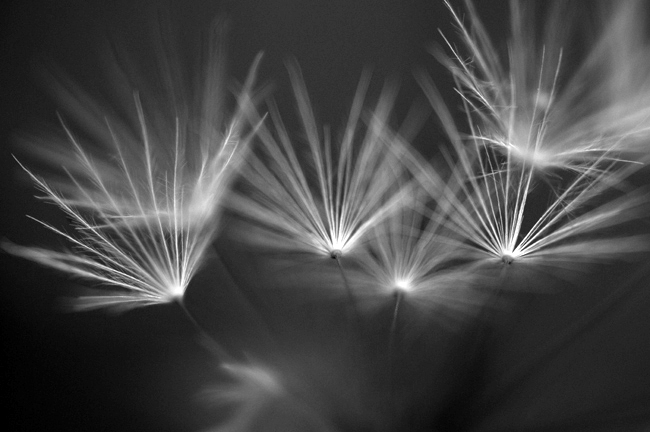
Dandelions Close-up

Dandelions Close-up
Dandelions In Black And White

Sunday, October 20, 2013

October 20, 2013


It felt good to rant against the machine.  I let out a lot of frustration and emotions.  For me, it is still  about creating the best images I can.  Thinking before I trip the shutter. I need to calm down, so I will go out and shoot some dew drops on spider webs and rake some birch leaves that have fallen to the ground.  You don't have to travel far to find good images to create. Photography keeps me focused and calm in rough seas.


October 19, 2013


Today photography is not photography in the older sense of image making.  There used to be a separation between the family photo book, the mundane consequences of living a normal life and the inspired craft of creating powerful images that made us really think about the world.  These images had purpose and they spoke to the human condition and tried to change society for the betterment of all.

Photography has become an assembly line of mass production for venture capitalists who have doubled down on investing in social media websites.  It was estimated that in 2012 over 380 billion images were made around the world.  In that year 350 million images were uploaded to Face Book each day alone.  These statistics will only grow exponentially as more and more people get their hands on smaller and cheaper cameras that can virtually shoot the image for them.

The social media websites are the perfect vehicle for the crowd sourced image making frenzy.  These companies get free imagery, most of which are snapshots of people's everyday lives. Let me repeat... that content is free. Can you imagine any other business where a company doesn't have to pay for inventory to be sold on their shelves or at least guarantee a return on sales when a certain volume of supplies are sold?  Can you imagine a business that can set pricing for its suppliers and sell the product to others without maintaining a decent selling price, and then does not share the profits with the very suppliers that created the inventory in the first place?

These social websites not only receive pics of people's lives but also written keywords about their personal inner likes and dislikes.  It is like a petrie dish of scientific laboratory testing.  All this blood sweat and tears is free to be analyzed by statisticians eager to mine the data to direct specific ads to the captive lemmings.  It seems that reality TV and social media sites have become "bare it all" brawls with no social redeeming value but to hear ones own shallow voice cry, "look at me!"

Making a living off your photo making efforts is becoming nonexistent.  Photo buying clients (a dying breed in an ecosystem being washed away by image flooding)  now bargain with impunity, making their case for lowered fees by letting the photographers know that any overpriced image quote (above free) is unacceptable.

Images are becoming stage props to be shown as teasers in front of the main show, ads.  Is the image really that important when any photo exposed to shallow eyes for a split second on a small hand held device doesn't register a meaningful view, but the next more important image, a  product, stops those eyes cold, their mouths begin to drool with envy... "I got to get me one of those!"

Visual content is king.  Paying for visual content is peasantry.  Words are becoming less and less important as papers shrink and minds shrink right along with them. Short sound bytes make perfect sense.  Keep your words tweetful and generic and no one will get what you are truly talking about.  Truth in six words or less.

It will take a strong focus to swim out of this tsunami of imagery that is destroying the photography landscape. These currents are strong, backed by bean counters making huge sums of money off the masses and their personal inventories.

Putting you imagery in free stock, penny stock or royalty free stock is also a no-win situation. These stock agencies could care less about your return on your investment.  Your time and energy are just part of the image content submission process.  It is your responsibility to shoot what they tell you to shoot, upload and size the images, color correct the images and then caption and keyword them on the promise of volume sales.  Huge volume sales, not for the individual photographer, but for the venture capitalists owning these stock agencies that are demanding a return on their investment at the cost of the lowly photographers.

What goes around comes around.  Stock photography undermined the assignment photographers income foundation and the new crowd sourced images have destroyed both professions simultaneously.

The tech companies make money, the manufactures make money, and the social media websites make money and the photographers run on treadmills thinking they're going places, but in this new reality of hand held media devices handcuffed to young eyes, all they are doing is running out of breath supplying a nano second of data to a kid skateboarding on the street cutting off an old geezer in an old Saturn because he is too busy looking at his damn phone as if nothing else existed!!


October 18, 2013

The photo industry is a facade.  It isn't image creation with purpose that is important now for businesses, it is finding a snapshot, a shallow expression that will fill a small screen for less than a few seconds and sell a product that won't be around next year. It is no longer about the image, but the technology that feeds social media.  That is where the money is made.  Photographs are secondary, less than secondary, they are fillers, party favors, cheap, plentiful and dumb, put up on websites so ads can pop up and sell you more technology or some other personal item or service you never knew you needed.

We have in the photo industry lost absolute control over our product.  And because we have lost control of our product we can't price the image for its true value.  We can chase a moving goal post and claim small victories as we keep losing the ability to our pay bills.  But the bottom line is that photographs are now a zero sum investment for the money men.  It is the new wow technologies that are the real money makers for the venture capitalists.  Photography is a numbing visual redundancy.  An imitative boring expose of "here I am, look at me and what I just did".  It is beyond embarrassing it is vulgar and exposes us to the existential reality of the absurd.  

In these board rooms I can hear the money men with their slick smiles telling investors, "don't worry about the photogs, they have already signed over their rights, so we can use and sell their images cheaper and cheaper.  And guess what, we will have them pay for their own storage on our websites by this new gimmick called the Cloud and we can give away their images at whatever price we deem necessary to increase volume".  A good deal all around for the titans of the venture capitalist market.

This drive to exploit imagery, in turn exploits the people taking these pictures, it becomes an addictive cycle of photographic abuse.  Seeing these images, becomes the motive to imitate them or take it one step further on up the ladder of obsession.  You must ask yourself what is the purpose of uploading every detail of your ordinary life.  There is only one reason, human frailty.  The need to be seen at any cost.  This fixation on social media doesn't allow us to slow down and see the world through our own unique eyes.  Social media is a distraction to inner reflection.  There is a special quality in all of us, and that is what needs to be expressed.

We seem to be born followers, and will follow the herd mentality right off the cliff of exploitation.  We now see the world through technology, losing the memories that we had of actually living in this world and experiencing things first hand and not through a small window of dull expressions.  In our lives are constant distractions from making the world our own.

We live trying to keep up with the ever expanding technology that makes image taking easier and easier but in the long run reduces the intent of photography to an artifact of bygone days. We have an artificial product now exploited by big business. But how often is an image made nowadays, that a human mind actually reflected longer than a split second to find a composition, a perspective that made an image worth taking.  We tend to ignore the real world and focus on surface glitter, this new fast paced run and gun crowd sourced slop that overwhelms our senses and our ability to see the babble that is dominating our lives in a negative way.


Sunday, October 13, 2013

October 13, 2013

Denis de Rougemont said, "The superstition of our time expresses itself in a mania for equating the sublime with the trivial."  And Henry Holmes Smith added to the quote, "and to take whatever is lower to be more real.

We have been conditioned to see resemblance in an image as a connection to the real and when there isn't a sure foot to view the picture on, a sure simple conclusion of an image's intent according to our own shallow view then we disconnect from the image and don't think of it as important or worthy of study.

The hard part in photography is to have a vision of your purpose in creating art.  Your inspiration can come from many extremes, even from ordinary resemblances.  The subjective image is one such extreme.  When you feel intensely and want to express that feeling visually can you rely on mundane objects to get that intent across to the viewer.  Or are you forced to create a new world of objects that comply with your expressive goals?  This new world of objects are still resemblances but are now part of an internal dialogue of purpose.   These objects can be abstracted to create an intent to express your deep revelations.  You might decide to light them in an extreme way to bring out harsh details instead of nuances in your subject details. You may decide to shoot through something,  that gives the illusion of barriers to your subject as in a relationship that is unbridgeable etc...

The key to personal imagery is to not go to such an extreme that only you can describe what the image intent is.


Saturday, September 28, 2013


September 28, 2013

"The greatest mystery is not that we have been flung at random between this profusion of matter and the stars, but that within this prison we can draw from ourselves images powerful enough to deny our nothingness." Andr'e Malraux's Les Noyers de l'Altenburg
We all seem to know and understand what photography is.  Robert Frank wrote, " Mass production of uninspired photojournalism and photography without thought becomes anonymous merchandise.  The air becomes infected with the "smell" of photography".
Photography is now a commodity to be bought and sold from the lowest common denominator, free.  When someone contacts me now from the many sites I have my images on, they will invariably ask me if I would "let" them use my image for a project they are working on.  They will then give me the hard luck story that they are a non-profit organization and have meager funds and will not be able to pay for the image usage.
 I could ask them how much are they being paid for their services at this non-profit organization, but really, why bother.  Everyone knows and understands that photography is cheap, it is plentiful and it can be given away for free.  I am always respectful and grateful that in their search on the web one of my images interested them.  I always send back a license fee for the usage they want and rarely do they accept the charges.
 How low will photographers go to make a sale?  Given the pervasive quantity of images in the photo market cage arena, we have hit bottom, they will give away I presume, their hard fought efforts to create a meaningful image, for nothing.   
Images are easy to create if you don't have a thought, a purpose behind the shutter release.  What will it take to enlighten image creators that a lack of finance undermines inspiration, and to maintain a creative economy we need to stop the incessant saturation of laissez faire image making. In other words, the combining of consumer generated content will continue the degradation of intentful image creation pricing.
Why go to all the trouble to fight for an image, making sure we have delved into the subject and have exhausted all possible emotions, to find that your return on your effort is nothing.  What is the incentive to work at your craft if everyone else is undermining the very foundation of economic value, a worth measured in an acceptable price for your efforts?  What happens when the lemmings follow the gurus of the industry and accept the pattern of spiraling down pricing?  We are left as small actors looking for bit parts along Hollywood Boulevard.  There is a value to Art. Art is precious, it is a necessity that inspires us and makes this over commercialized physical world we live in bearable.
I believe if you love creating images then nothing will stop you from your goals.  Persistence under extreme pressure should make you more determined, not less.  You might have to find other avenues of revenue and balance your obsessive need to create images with love of family, friends and your local community.  Alot of my friends in the photography business began looking for other outlets for their creativity as the photo industry collapsed.  In some cases these outlets were their first loves.  My friends are now back to writing comedy, playing and performing music, writing essays, writing books and poetry, teaching and painting.  We as creative humans must express ourselves and this expression is not limited to just photography. Keep making meaningful images but also don't get obsessive about just one means of expression. Fulfill your lives in as many ways you can. In other words, it is a good idea nowadays not to put all your skills in one basket.


Sunday, September 8, 2013

September 8, 2013


Can you still create images and work full time?  I think you can.  I have been doing it now for over three years and yes, it is exhausting but I still feel rewarded by making an effort to get out and create imagery.  I have been in the photo business for 35 years and have been taking photos since my younger brother got a Polaroid camera for Christmas and I got a reel to reel tape recorder.  When I saw that camera and the images he created, I knew that is what I wanted to do. So I would take his camera when he wasn't looking and shoot images I felt were interesting.

Working two jobs takes alot out of you and when you add in the hardest job you will ever have, raising a family, well, time management becomes so important in order to get everything accomplished. Success will come in little steps and small victories by being focused, disciplined and taking action.

Here are some things that help me:

  1. Shoot every week.
  2. Edit the images down to the very best
  3. Do post production on the images ie: cropping, color correcting and spotting. 
  4. Caption and keyword your imagery. This is a must.
  5. Get them out to as many outlets as possible to make sales.
  6. Get a website of your own, I use PhotoShelter
  7. Have patience
  8. Have fun and don't get caught up in the newest and greatest.  Don't take yourself too seriously. Just be yourself and enjoy family, friends and creating imagery you can be proud to share with others.

These are just a summary of what it takes.  We all have our priorities. In the early 90s soon after the birth of our second child, my wife and I decided to sell our house and travel in an RV (our first child was grown and out of the house). I was lucky enough to have my wife's support and we traveled in that RV for ten years.  We raised our second child in the motor home and she saw some of the great places this country has to offer.  When we finally decided to settle back down in a house (she was turning thirteen and the RV was getting alittle crowded) our daughter mentioned one day that she wished we were back traveling! That made me grateful we had done what we did and took a chance and it paid off.


Saturday, August 31, 2013


September 1, 2013


Distractions build barriers to constructive purpose.  As an image maker you must focus your intentions and pursue great imagery with passion and quiet resolve.  If you get too caught up in photography's high and lows your energy level can't sustain itself.

Sometimes life interferes with our true calling and we get caught up in its flow and lose our inner foundation and the goals we had set for ourselves in our youth.  We lose sight of the shoreline and drift where ever the current take us.  We can't do everything we want.  We have responsibilities and family and side jobs.  But, we still can pursue our image making little by little, step by step and as the years fly by, you will find, that you have created a body of work you can be proud of, and you will have an inner peace because you did your best and accomplished your goals of making meaningful images.

You open your eyes and there is the material waiting for your personal style to give it meaning and then to share your vision with others, to inspire them.


September 1, 2013


I have posted before about the fun we have creating our haunted Halloween porch.  Last year, I had a hard time coming up with an idea for how I was going to create a humorous image of the carved pumpkins we used on the steps leading up to our mysterious and scary porch.  Here is what I came up with.                                                    

                                                       Pumpkin Escape


Halloween Images from 2012


Sunday, August 25, 2013

August 25, 2013


I have often wondered about the camera being a crutch to suspend fear when shooting subjects that are intense.  We lift the camera to our eye, meter, compose and shoot.  All the while there is an activity happening in front of us but the camera is a filter, a barrier that allows us to remain objective and not to think too much on the drama unfolding before us.  We are in a sense, disconnected from the reality we are photographing.  The scene becomes more manageable this way and we have what seems like more time to reflect and act as if a play were being performed and we are in the audience.

I was up in a small airplane last week and was photographing aerial images around Seattle. In order to shoot photos from this airplane we had to open the canopy 8 to 12 inches while in flight.  The big question was, would the air current push the canopy open more and expose us to real air turbulence and an early landing?

When shooting from a small aircraft I shoot at the fastest shutter speed possible.  In this case, I pushed my ASA and made images using a shutter speed of 1/1000 of a second.  I used a 105mm and 50mm lens with hoods.  This cuts down on side glare as the sun sets.  I kept my arms and hands away from touching any part of the plane to cut down on vibrations that could blur my images.  My pilot was great and did a good job turning the plane so I had a better angle to make images of my chosen subjects.  One of the hardest things was keeping the right distance from the opening and sides of the canopy.  Too close to the opening I had wind turbulence, too far away and I had the canopy edges cutting into my frame.  It took awhile for me to get in a groove and maintain a good shooting distance.

I started off talking about the camera as a barrier from experiencing a intense situation.  I do not like to fly!  Having the camera in this case wasn't as much a barrier but a mechanism that allowed me to remain objective and focus on my composition and exposure.  I still experienced the fear and excitement of the flight, but because I was shooting, I was able to enjoy the moment without over thinking of my fears.  If the camera ever became such a crutch that it didn't allow me to experience  the real world I was photographing live, I wouldn't pick up the camera at all.


Saturday, August 17, 2013

July 29, 2013


Are we settling for casual imagery as the new substitute for images that touch a nerve in us and make us think and react in deeper ways?  A great photograph communicates an underlying connection to all humanity, it articulates a purpose, exposes a wrong or instills in us a love for our fellow human beings.   A great image is not just a localized smile or hands up in the air dancing.  We love to imitate because it is fun to be part of trends.  Social media's ever growing control on the image process and distribution makes it easier for us as photographers to play to the masses and not to our own inner voice.  Our everyday lives are broadcast over the Internet to others, exclaiming that I am here, look at me and see what I have done today.  We are like Pavlov's dog getting up each morning and checking our e-mails and social media sites.  We have to see what everyone else is doing and then we have to respond and make our voices heard in words and imagery.  It is addicting but it is it really communicating?

A great image expresses a true deep sense of the subject and what the photographer felt when he made the image.   This feeling can be shared with others through the common good/morals we all try to live by. A great photo can effect us in a profound way if we as the viewer are mind present and really looking at the subject and not letting our minds wonder over to the next local news trauma of the day.

I believe we are seeing a moving away from imagery of depth and powerful emotions to a more lazy approach to image making.

There is this casual/shallow quality to content now.  A willingness to just be there and shoot and what ever happens happens and those images will be marketed as authentic because we are being conditioned to see the world only as a quick expression and not on a deeper level with meaning and purpose.

We must slow down our visual overload.  This tsunami of images and words is numbing us to be more apathetic to a bigger picture of the world we live in and we are not creating worthy imagery but hoarding stuff that ultimately is meaningless.  We have to and should live life on a deeper level than this constant need for attention, any attention.  This need to be seen is pushing us to do and say more and create more careless stuff.. and this in turn is causing more people to become indifferent to any quality in life.

Slow down your life.  Slow down your creativity when making images.  What does all this flood of information have to do with your life.  This minutia of details bogs down your thinking process. We don't have to be everything and take images of everything.   You can limit your social media intake and be more selective and purposeful in your image creation.


Wednesday, August 7, 2013

August 7, 2013


I am in the process of editing, cropping and spotting images.  It is a never ending battle to get new work out into the world and yet live a family life.  This close up image of a maple leaf reminds me of why I love macro photography.  Macro photography is analogous to an inner dialogue physically manifested.  When I saw the Japanese Maple tree I new their was an image present.  I took some images further back but something wasn't clicking.  I moved closer to the subject and began to see details lining up.  As I moved tighter and closer to my photo goal this image presented itself.  My inner dialogue didn't allow me to just shoot an over all scene and move on.  I was mentally present and listened to my inner voice and created this image.

This was a very difficult image to take.  When you are shooting close to your subject any wind or breeze plays havoc with your focus.  In this image I needed both the dew drop and leaf to be sharp.  I had to twist and turn my body to get in a position so that the upper leaf and the dew drop was on a parallel plane for focusing.  And I had to make sure that the background enhanced the main subject.  Many, many frames later I hit the jack pot so to speak.  I think my sore back was worth it.


Monday, August 5, 2013

July 27, 2013


I like getting up early for sunrise.  It sets the direction of the day on a good path.  I decided to drive down into the Snohomish Valley.  Timing is such a intricate part of photography. We sometimes miss out on the potential for great images by not making an effort to just get out and do it, make photos.

If you are driving down Highway 9 heading south as you get closer to the City of Snohomish you can get a glimpse of the valley floor.  Here you will see whether your choice of possible subjects was worth it. This morning the fog sat low over the fields.  At these moments you have a rush of excitement because the potential is there for good images.  I drove along the South West road that winds along the valley floor.  This road is elevated so at times you can be alittle above the fog.  Beware, always drive slower and keep one eye on the road at all times you never know when a working farmer will be out on the road with his tractor or a raccoon hurrying home for the day.  That advice has saved me many times.

As I was driving I kept seeing potential images but I was looking for that aha moment when all the elements come together to make a great image.  Well, it looked like I was going to have to work for any good photograph.  As I passed an opening between a line of bushes and a farm house I spotted a row of electrical towers standing in low lying fog and moving off into the distance toward the Cascade Mountain Range.  Sentinels of our communication obsession.  So I pulled over and set up.  I used a variety of lenses to get the best composition I could given my limited area that I could shoot from.  Once I went through my normal routine of choosing wide, medium and telephoto lenses I realized that I had milked this particular scene.  And my interest here was done.  So I packed up and moved down the road.  As I passed another barn I saw a dirt road that went down into the valley and believe it or not, it didn't have a no trespass sign on the entrance.  So I went down the road and parked.  I took some images of the fog and sunrise behind a large tree and then as the sun rose higher in the east sky I hiked further down the road and found a community vegetable patch.  I stayed and photographed it for a long time shooting the different vegetables people had planted and taking images of some of their tools and large water containers they had set up.

We start in one direction and end up in another.  In a matter of a couple of hours I was able to see the beautiful valley fog and shoot some interesting subjects along the way.  If someone would have told me that when I started out this morning that some of my favorite images would be of a community veggie patch in Snohomish Valley I would have been surprised.  But that is why we seek out good images and let our instincts and luck sometimes take charge and guide us to interesting subjects that were not even on our photo radar..


Friday, July 26, 2013

July 27, 2013


I went to see the United Indians of all Tribes annual celebration last weekend.  What a great time.  The Native American traditional clothing was amazing.  There are some etiquette tips to keep in mind if you happen to be at one of these beautiful celebrations.  Ask first before you take a picture of the performers.  Some performers don't want their picture taken while others welcome it.  I guess the main etiquette when photographing people is to be friendly and respectful and when necessary ask before you leap.  During the Grand entry stand and remove your hat.  Don't pick up any feather that has fallen to the ground, ask one of the staff to pick it up and return it to the owner.  Don't block others from viewing the tribal dancing.  I like to sit or kneel in front of a standing crowd, that way no one gets irked and frustrated with me.

When you are taking photos look at the background as the Tribes circle and dance in front of you.  Try and position yourself in an area where the background is neutral and won't distract from the colorful clothing.   If it is a sunny day photograph with the sun behind you.  This way you won't have your subject in deep shadows.  Use a fast shutter speed to stop the subjects movements.  Capturing the facial expressions can be very powerful.  You will need to use a longer lens.  I brought a 105mm lens plus shorter lenses but next time I will also bring my 180mm lens so I can get a tighter close up of the traditional clothing and face painting of the dancers.  I will also experiment with slower shutter speeds for movement and color when using the longer lens.  I will pan with my camera following the dancers as they move though the frame.  You will have to decide how abstract you want to take your final image.

It was very powerful and impressive to see the Native American Tribes parade into the dance circle with the drums beating and the voices chanting keeping their culture alive and well.


Sunday, July 21, 2013

July 21, 2013


I like to make photo lists and cut tear sheets from magazines and list potential concept shots that I want to work on.  This list expresses for me a certain amount of interest in these subjects.  I have a curiosity to explore their potential.

When we go out to shoot, (even if we have a tight list of potential subjects) we are always looking for serendipity to play a roll in our ability to create a better image.   

When we get to our location we find many things that will interfere with our image making goals.  The terrain is not what we expected, it is the wrong time of year, the light is too contrasty for your image goal, it is stormy, time of day is wrong, you're thinking to much about an argument you had with your companion, your interest is waning etc...

This invariable leads to a doubt of your subject choice.  We are always thinking of someplace with better opportunities.  Our time is precious and we can't just sit and wait.  This is not the nature of man.  We are impatient to the detriment of our ability to create great images. Our minds want it all and we don't want to work hard to get it. So we start to doubt our location and the image goals we set for ourselves.  Maybe we should move to a new, better location and see how the light is there and not have to waste time in this location where nothing is working for me to get a great image.

But if we wait and look at the scene before us and are patient, the subject will reveal worthy images to us.

The real issue is light and subject.  We all wish for better imagery.  What makes better images is dramatic light, dramatic subject and composition and the relationship the viewer has with those choices you made to create that image.

But how realistic is it to have every element line up so that all you have to do is step out of your car, set up your tripod, click the shutter and then move on because you have captured that perfect dramatic image.  Or better yet, why even get out of the car, set your ISO at 400 and shoot the scene while keeping a consistent speed of 60mph. 

What stops you from experiencing the true revelations of this world? 

Over thinking can be a barrier.  It becomes a process of abstraction leaving you unprepared to experience the here and now, the deep beauty that lies in front of your eyes just within your grasp, if only you would open those eyes and see, really see what is in front of you.  

Any layers you put between you and your subject can dull your perceptions. Doubting yourself and your image intention is one of those barriers.

These layers can hamper your ability to see old as new again. You are blinded by image stereotypes and mundane self observations to see your surroundings you walk by every day as subjects worthy to photograph.  Get out of your box and notice and see the new subjects (that were always present) of beauty that abound right in front of you. 

Once you have opened your eyes to a new world of wonder and possibilities it is time to express your new found observational skills.

Any place you choose to shoot from has the potential for great imagery.  It is letting go of your inner barriers and just open your eyes. Take in the light, its quality, direction, its motifs.  

What is illuminating this scene that has finally caught your attention? Now that you see it, will you be able to make an image worthy of your seeing.  Can you make a transition of seeing the subject in only one way to seeing your subject in many different lighting situations.  Maybe this overcast light is good for less contrast, maybe this harsh sunlight is telling me to wait for sunrise or sunset light, maybe using a different lens and getting low to the ground will bring the viewer suddenly into your new perspective and a connection will be made.

Take in the light and the paradox of timing and being there. 

How many times have photographers found the perfect spot to shoot their subject from only to have the light fizzle and their patience tested.  And how often is the opposite true, you are in a bad lighting situation but you have had the patience to wait , knowing that if the light breaks through you will have a dramatic image and suddenly the light comes and this beautiful light hits your subject and all is good and your rewarded with great images.

Trust your instincts.


Saturday, July 13, 2013

June 23, 2013


I was shooting at Queen Anne Hill a few weeks ago at Kerry park.  This park has one of the most iconic views of the Seattle Skyline.  You get all the beauty of the city with the Space Needle and the downtown corridor and Mount Rainier as a back drop.  You also get the Seattle waterfront with the new Ferris Wheel and Ferry boats leaving and coming into the city as the sun sets on a warm summer evening.  It is truly magical.  It was packed with photographers and tourists visiting from other cites.  Tour buses will pull up and crowds of people will get out and come and stand with us (photographers) and take quick photos of the city and then leave for the next tourist destination.

What made this day even more special was the Moonrise.  During the summer months the moon moves south along the earths horizon line while the sun moves north.  Because of this, you get a perfect storm of sunset light reflecting off the glass buildings and a moonrise that will go over the city at twilight. What fun.

I got there early knowing it was going to be packed. I brought an extra tripod to put up next to my working tripod to save a place for a photographer friend that was going to be late.

I do make the effort to update my image files with the newest Seattle skyline imagery. I still make some sales of these images. But not as I once did, in the heyday of Stock.  There are just too many images being taken at any given moment to make it a worthwhile, constant job to concentrate on skylines only or any subject that is easily accessible. This doesn't mean you don't shoot these subjects but you balance shooting with markability, interest and light.