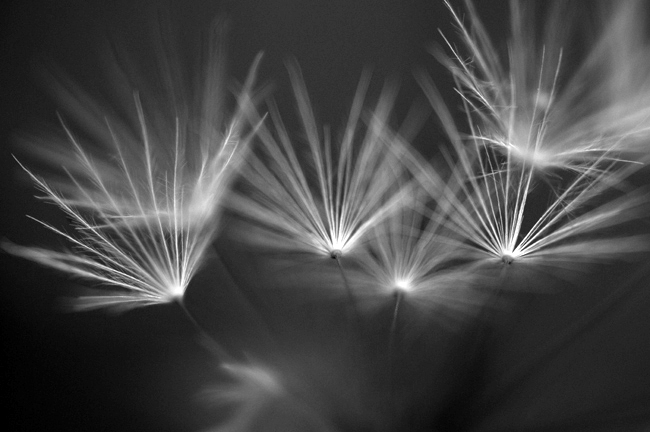
Dandelions Close-up

Dandelions Close-up
Dandelions In Black And White

Sunday, April 14, 2013


How do you protect your business interest in this crazy giveaway of the Stock Photo market? Do you shoot hi-demand lifestyle imagery?  Are you finding yourself constantly sleep walking through your shoots?  Can you ever keep up with the proliferation of imagery that hits the web on a second by second basis?

I find that I enjoy and have an interest in shooting a variety of subjects.  For me it doesn't matter if it is a studio concept shot or a close-up of a lady bug.  I enjoy photography period. By shooting a variety of subjects I don't put all my eggs in one basket but keep my portfolio open to a variety of potential clients.  Nowadays a photographer has to be aware that imitators are all over the world and a subject that sells will be copied and exploited.  You have to keep looking and shooting new work and personal work to keep your creative juices flowing.

This doesn't mean that you shouldn't photograph a subject in depth and become an expert on the subject you are shooting.  By having in depth coverage of a subject you will get a valuable reputation and clients will come back to you for more images because they trust your ability to know the subject and have detailed information attached to each of the images that you send them.  But I think nowadays it is important to branch out and shoot a variety of subjects and just maybe create another niche for your photo income.

I enjoy shooting abstract images and patterns.  I am always looking for nature's patterns or patterns that I create in the studio.


I had some left over paint from another photo shoot I was doing so I decided to drip paint on my subject and to my surprise the paint didn't adhere to the surface of my subject but instead peeled away from it and created unusual colorful patterns.  I was in photo heaven.


Sunday, April 7, 2013

April 6, 2013


Photography is paying attention.  I enjoy the moment better because I am paying more attention to the details and not being distracted by external forces. When you pay attention you will find yourself looking deeper into the scene, subject and light. 

Your Photography is better when you have an interest in your subject.  Wanting to take images of your subject is a lot better than being bored and just going through the motions.  Photography shouldn't take away from your interest in your subject it should enhance your interest and make you more willing to take your time and explore the scene.  For me, photography enhances an experience of environment not distract from it.  With interest your images will be better.  

Do you go out looking to capture imagery or do you go somewhere and bring your camera along just in case something interests you?  I don't travel and then shoot.  I think about what I want to shoot before I travel.  Of course it never works out exactly as planned and that is the beauty of an empty memory card, so many possibilities.

The unexpected moment is why we love image making.  Let go and just take the photo, don't think.  We have all experienced moments where we just pushed the shutter and didn't even think about exposure, composition and light.


Saturday, March 23, 2013

March 23, 2012


In the late 80's I went down to the American Southwest with a photographer friend who was showing me places he had visited the proceeding year. One particular subject always stood out in my mind and that was Antelope Canyon on Navajo Land near Page Arizona. My friend and I had to walk a mile or more to get to the Upper Canyon and when we got there a large bull was guarding the entrance.  He was looking for shade and wasn't going to give up his spot easily.  Eventually the bull moved on and we entered the slot canyon.  The light was amazing and I felt like we entered some ancient ruin and the stillness in the air was like a silent prayer to the spirit gods.


Sunday, March 17, 2013

March 17, 2013


Photography is a paradox of technique and style and purpose.  When we enter photography, I feel it is important to learn your skills from beginning to end (it used to mean in the old days loading your own film, processing the film, printing the negative and then displaying it for critique).  Now, it is learning the cameras functions. Put your camera on manual and do tests to understand how your meter functions under different lighting situations.  Play with all the bells and whistles on your camera to see if there are any options that could be used to improve your image results.  Study composition and discover why good photographs attract attention.  How did the photographer find the subject and use light and composition to make a quality image. 

We have a tendency to get in a rut when we photograph and we end up playing it safe and setting the camera controls the same no matter what subject presents itself to us.  One of things that I emphasize in my shooting is to be prepared but also be open to the opportunities that present themselves.  Preparation is done before I get to my destination.  This could be as close as my back yard and shooting frost close-ups on leaves or spider webs.  

Preparation is knowing your lenses and camera controls and planning ahead, a starting point in your shooting.  This starting point is just that a start.  Next, it is to shoot a few frames and begin to get into your subject.  Your mind begins to see new and unexpected details or compositions that look interesting.  You begin to open up to your subject and let your subjects true nature, as you perceive it, reveal itself to you.   I have never photographed a subject that didn't surprise me in some way.   All subjects  reveal something unexpected to the photographer that is paying attention.  And that is the paradox I was talking about in the beginning.  You prepare, you have your own style and then serendipity places you in a whole new relationship to your subject.  You are no longer worrying about your exposures and shutter speeds because you are acting intuitively and on a deeper subconscious level making adjustments to fit your interpretation of your subject.  You start in one direction and end up miles away in another more open purpose.  Your purpose now is not to limit your exploration but to broaden it.  You begin to let go of your dogmas and respond to your subject naturally and creatively.     


Sunday, March 3, 2013

March 2, 2013

In order for imagery to be meaningful it has to have content with purpose.  Light, technique, composition, insight, intuition, patience are all very important as you look for subjects to photograph.

Edward Weston said, "Good composition is only the strongest way to see the subject.  It cannot be taught because, like all creative effort, it is a matter of personal growth".

Images taken randomly and at a shallow level of consciousness can become frivolous.  You must try and attach the subject you are photographing to and experience whether it is emotional or physical,  whereby the viewer understands your passion for your subject first hand, simply and without confusion.  Pay attention to the details in your photo that interfere with your intent. Don't be in a hurry to move away from an interesting scene.  Soak it in, look deeper, experiment with composition, with exposure, think about shooting vertical and then horizontal. Take notes about where the sun is in relation to your subject, would a sunrise or sunset be better and would that make the image more dramatic. Maybe find out when a full moon is coming and plan a shoot around that.  Good image making takes patience, planning and purpose. Finally seeing your subject with fresh eyes for the first time, the equivalence (Minor White) to your feelings manifested in external nature creates an image to be shared with pride.


Monday, February 4, 2013

February 2, 2013


I was mentioning, awhile ago, photographers that shoot random images without purpose and then use special effects filters/photoshop to change the look of the photograph to give it a new quality without depth of meaning.  I think this was a little too harsh because when you are young in the photo making business you have to experiment and try new things to find that style that fits your inner personality.  Not the social you which is full of itself but the reflective you that wants something more powerful and meaningful from your imagery. We need to grow and make changes in what and how we shoot.  What I was referring to is the shooter that allows special effects to add an an unnecessary layer to an already forgettable subject.  If you are open to your environment and not locked into a shallow repetition of the ordinary, if you look deeper and react quickly to the changing light and make an effort to see your subject with new eyes then your images won't need and extra layer of ego.


Sunday, January 27, 2013

January 27, 2013


Well I am back after my computer crashed.  Nothing like the sound of a big pop and then the smell of burning circuits to make your day.  My computer guy replaced the power supply on my G5 and I am back up and running.

I love shooting along the Montlake Cut at sunrise. The Husky crew and other rowing clubs begin their workouts at dawn.  The quiet stillness and then the sound of the looms rubbing against the oarlock and then a slight splash hitting the water is beautiful.


Sunday, December 16, 2012

Wishing everyone a Happy Holiday Season and a Great New Year!


December 7, 2012


I need to think more conceptual and not allow a scene or subject to overwhelm my senses with extraneous details.  If a scene is powerful (has alot of striking subjects and striking light) don't jump in and begin shooting randomly.  I know sometimes light is fleeting and you must act fast but calm your nerves and think.  Think about the subject in front of you, what idea, emotions, feelings does this subject represent and what can I do to create through my choice of lens, exposure, composition, perspective etc.. something more than just random objects in the scene that give the viewer a mixed and confusing response to your image.  By making your image a metaphor, you have created an expression beyond literal seeing.

Think about your image's purpose before you click the shutter.

What do these details represent, what larger meaning is speaking to me through my subject and the light that is present and the composition that I am choosing.

Think about the scene. What if you eliminate parts of your initial composition.  Are you shooting with a wide angle lens and your subject is now just part of an overall landscape that doesn't speak to your initial purpose for composing the scene.

Open yourself  up to that voice in your head that is speaking to you, wanting you to look deeper into the subject. Look at the scene from a different perspective that would speak more to your audience and give that inner voice a visual representation.


Sunday, November 18, 2012

Happy Thanksgiving


I want to wish all a Happy Thanksgiving.  I hope everyone is spending time with family and friends.


November 18, 2012


Do you over think when you are taking photos? Is your mind overly active, moving in different direction worrying about how you look to others as you explore the subject of interest around you?  Are you afraid your going to step on someones toes and be yelled at?  I guess you have to ask yourself is this subject worth my effort even if it means taking a chance on being singled out in a crowd.  Do you have confidence in your self as a photographer to focus on your goal, choosing to take a great image that you and only you see.  When you come to a scene whether it is a street scene in a busy city or a landscape tourist trap you must let go of your anxieties that have built up and just intuitively recognize your perceptual responses that are guiding you to your subject.  This inner sight you are relying on doesn't have an ego, an I that is exploring your surroundings.  Something is guiding you to your subject and if you let go and release your constricted perceptions and just let the scene reveal itself to you, let this inner sight guide you to compose a scene that is meaningful to you, your images will be worth taking.    

Subjects are fleeting, light changes quickly and a momentary pause could mean the difference of getting your photo or something less revealing.  


Saturday, November 3, 2012


Going back to a special environment that means something to you is what good photography is all about.  Once you have been to a scene you have more ideas of what can and will make a better image.  You have done the initial leg work and have had that inspirational moment, when you just know that this place is special.  A great location inspires you to have patience and wait for the best light (sunrise/sunset), composition (you have already tried a number of them previously), atmospheric conditions (depending on the time of the year), and details that can all come together and make a great photograph.  For me Lake Cassidy is one of those places.  In an earlier post I mentioned a missed opportunity that arose when I wasn't prepared because of nervous energy that sabotaged my composition and choice of lens.  I wanted to post some images of the lake when I was more calm and sure of my lens, composition and light.


Sunday, October 21, 2012


October 21, 2012


Can you make it in Stock Photography without shooting those high demand images it seems all the clients need?  You know the ones, the edgy, natural, de-composition imagery of young moderns exploring their world without fear, inhibitions or purpose.  The image depicts a moment in time, composed with a gesture to illustrate an emotion we can all identify with and through that connection buy the product they have subtly put on left center stage. Can you have it both ways, a career creating your own personal images that seem to resonate beyond the art world and get into mainstream consciousness and yet will sell?  I feel the answer now is no.  Be prepared to work at other things as well as your photography in order to make a living.  The internet has leveled the relevance of licensing your imagery. It has cheapened the photo experience and lowered the bar on what can sell (and the price it can sell at) and what should sell.  Now in the web environment anything can get published.  You have photo apps that can transform an ordinary image of a person or landscape or urban environment into an edgy combo of self interest and self delusion that makes the viewer believe that the image they are seeing was actually the purposeful intent of the photographer. We have on one hand photographers that believe an image must have a purpose and a subject to reveal, and on the other hand photographers that shoot in rapid fire mode always checking their monitor to see what they shot and after seeing it, never explore further the subject in front of them.  They never have that nagging did I miss something moment, have I explored all the possibilities I can with this subject. With the dreaded back monitor, we see the image come up and that is good enough so they  upload the images and manipulate them after the fact. Not to enhance the subject (because there was no subject to begin with) but, to cover over the lack of purpose in making the image. These broken connections between the subject, the image and the viewer become the new standard to exploit.  We become more fragmented in our ability to see purpose and revelations in the imagery of others.  It becomes more difficult to see their conscious choices to enhance and educate us on the chosen subject. When the minutiae of detail we see on the web becomes so vast that it drowns out good photography, we are on the threshold of selfish, delusions of grandeur. If you don't explore your subject and get closer to it and reveal something of its inner character, then you have lost the depth it takes to create emotional connected work.  I know it is not all or nothing; just creating personal work and nothing else.  I create imagery for stock photo clients and then create imagery for myself.  Sometimes the personal work crosses over to mainstream media outlets but more often than not the clients have been conditioned to accept whatever trend is being perpetrated on them at the time.


Saturday, October 13, 2012

October 13, 2012


We enjoy Halloween.  Each year I get 12 pumpkins and carve them for our haunted porch.  The pumpkins line the steps leading up to this dark, mysterious, scary cavern.  A huge bat hangs from the porch and we have a mannequin that has a scream mask on it.  When our daughter was younger she too would dress up like the mannequin and stand still on the opposite side of the porch and the kids couldn't tell which one was real or fake.  She got the biggest kick out of scaring them as they came up to touch her cloak.  Years later some of the kids think that the one mannequin we still use is real and they don't want to come up to our house.

Once Halloween is over I use those pumpkins in a photo shoot.