April 28, 2012
Along with street shooting I would sometimes go to the shady side of downtown Seattle and stay overnight in a run down motel or hotel and shoot images in the room. Not the best idea in the world but when you are young you think you have to be in on the edge in order to get good images. This particular photo was for a class assignment.
Sunday, April 29, 2012
April 28, 2012
When shooting street photography there is always a chance that you will be approached by people that don't have your best interest at heart. When I was doing alot of street shooting I was harassed by a homeless guy that wanted me to take his picture for a buck. At first I resisted but soon found that the logical thing to do was take his photo and be done with it. So, I took his photo and paid the fee and moved on.
Another time I was shooting in Santa Barbara of all places and was approached by a gang member who was suspicious of me taking pics on his turf. The weird thing was that I was along the waterfront by Stearns Wharf on a beautiful sunny evening with tourists walking by and here I was being confronted by a gang banger (Tobias was his name) holding a beer bottle and asking me for ID. I could have balked but once again my intuition took over and I saw the danger being presented so I took out my business card that was in a plastic sleeve and attached to this card was another plastic sleeve that had a 35mm slide enclosed. Once Toby (we were fast becoming friends) saw this and was convinced that I wasn't a narc taking photos of him and his buddies, he said to me, "If anyone gives you any trouble tell them Toby said it was all right for you to take photos".
You have to be alert to people and places and not get yourself cornered in an awkward and dangerous situation.
When shooting street photography there is always a chance that you will be approached by people that don't have your best interest at heart. When I was doing alot of street shooting I was harassed by a homeless guy that wanted me to take his picture for a buck. At first I resisted but soon found that the logical thing to do was take his photo and be done with it. So, I took his photo and paid the fee and moved on.
Another time I was shooting in Santa Barbara of all places and was approached by a gang member who was suspicious of me taking pics on his turf. The weird thing was that I was along the waterfront by Stearns Wharf on a beautiful sunny evening with tourists walking by and here I was being confronted by a gang banger (Tobias was his name) holding a beer bottle and asking me for ID. I could have balked but once again my intuition took over and I saw the danger being presented so I took out my business card that was in a plastic sleeve and attached to this card was another plastic sleeve that had a 35mm slide enclosed. Once Toby (we were fast becoming friends) saw this and was convinced that I wasn't a narc taking photos of him and his buddies, he said to me, "If anyone gives you any trouble tell them Toby said it was all right for you to take photos".
Sunday, April 8, 2012
Jumping Jupiter Overwhelmed By Choices
April 8, 2012
We have a Jack Russell or Parson's Terrier and he is highly energetic. He loves his tennis balls and will pick the most inopportune times to want to play. For instance at 11:00 o'clock at night right before we are getting ready to go to bed, we will hear the ball drop at the foot of the bed. This breed of dog is also tenacious and when it gets a whiff of another animal he will track it until he finds it. Using this instinct I decided to complicate his life by setting up a concept shot. It was a concept of being overwhelmed by choices and not being able to make up your mind. So I put a large group of tennis balls into a plastic container and put little dog treats under the tennis balls so his nose would pick up the scent and he would start digging. And sure enough his head was in the plastic bin before I could get the first frame off. It was a fun shoot and I think Jupiter enjoyed it too for the special treats he had.
Saturday, March 24, 2012
Travel vs Staying Close to Home
3/17/2012
I love to travel. My family traveled along the West Coast through the nineties in an RV and stayed at all the major cities and parks along the way. There was so much to shoot that you could never run out of great subjects.
Fast forward to the present and the major changes that are taking place in the Photo Industry and more to come and you would have a hard time convincing me that travel photography can give you a good decent, consistent living in today's market place for Stock Imagery. It used to be that you would travel, take photos and then submit those images to your agency and then as those images began to sell, you would use that income to fund the next trip and so on and so on. But nowadays because of the digital revolution destroying the dollar return on the license for an image and agencies fighting to gain market share by giving imagery away for almost nothing, you cannot survive and prosper on Stock Photography income alone. That is why you have so many professional photographers doing weddings, portraits, seminars, workshops, consulting and working at other jobs outside of the photo industry. They are all scrambling to stay afloat in this topsy-turvy world we live in.
With photos dirt cheap, why would a client pay more for a travel image from you when all he has to do is use the web and find some photographer from that area of the world that he is interested in and deal directly with him. Who cares if he is an amateur, ultimately we are all amateurs learning new things all the time and becoming better at our hobbies. The lesson now is to be smart and not waste your time thinking that you can travel thousands of miles to exotic locations and create great images in these beautiful locations and expect those images to sell automatically.
So even before you start your journey and get on a plane you are already traveling with an albatross around your neck, no matter where you go everybody is a photographer and everybody can take an image and sell that image on the web. They also have the leisure time to wait for the best light and not rush their shooting because they are not on a deadline.
There will be alot more crowd sourcing sites popping up like istock photo, Flickr and Tumblr and once they reach a critical mass of subjects the people running the site will contact the big photo agencies and allow them to troll through the site and cherry pick the best images as long as the photographer gives them exclusivity.
Plus, you have the cost of getting to your "exotic"location and then paying for a room, food, rental car, family, entertainment and more. I put in family above because if you are a travel photographer and leave your family behind to shoot in far away places then your also losing out on quality time with the most important relationships in your life. That is why I took my family with me. I regretted not doing this with my older daughter.
So as a travel shooter you have no guarantees that your images will sell anymore. Actually you can do the math, as more and more people get the photo bug and buy digital camera or cell phones your imagery becomes less and less critical for buyers who have an overabundance of photos to choose from any one of which will fit their editorial and commercial brands.
Right now I am spending more time creating conceptual images and when I do travel, I travel in Washington State. Washington has all the seasons, mountains, rivers, lakes and cities I will ever need. By staying close to home I can still create images but not go broke traveling and spending money with no guarantees that I can recoup my investment and time. Also, I got out of the rat race, you know what I am taking about, that feeling that you have to keep producing more and more just to maintain your level of income and even as you produce an assembly line of imagery you know that nothing can compete with the millions of imagery being uploaded on a daily basis on the web and being sold for pennies on the dollar. The race is already lost and you might as well create images you enjoy making because you might not see any income from them anyway.
That doesn't mean I will not travel again but for now I am satisfied by shooting subjects locally.
I love to travel. My family traveled along the West Coast through the nineties in an RV and stayed at all the major cities and parks along the way. There was so much to shoot that you could never run out of great subjects.
Fast forward to the present and the major changes that are taking place in the Photo Industry and more to come and you would have a hard time convincing me that travel photography can give you a good decent, consistent living in today's market place for Stock Imagery. It used to be that you would travel, take photos and then submit those images to your agency and then as those images began to sell, you would use that income to fund the next trip and so on and so on. But nowadays because of the digital revolution destroying the dollar return on the license for an image and agencies fighting to gain market share by giving imagery away for almost nothing, you cannot survive and prosper on Stock Photography income alone. That is why you have so many professional photographers doing weddings, portraits, seminars, workshops, consulting and working at other jobs outside of the photo industry. They are all scrambling to stay afloat in this topsy-turvy world we live in.
With photos dirt cheap, why would a client pay more for a travel image from you when all he has to do is use the web and find some photographer from that area of the world that he is interested in and deal directly with him. Who cares if he is an amateur, ultimately we are all amateurs learning new things all the time and becoming better at our hobbies. The lesson now is to be smart and not waste your time thinking that you can travel thousands of miles to exotic locations and create great images in these beautiful locations and expect those images to sell automatically.
So even before you start your journey and get on a plane you are already traveling with an albatross around your neck, no matter where you go everybody is a photographer and everybody can take an image and sell that image on the web. They also have the leisure time to wait for the best light and not rush their shooting because they are not on a deadline.
There will be alot more crowd sourcing sites popping up like istock photo, Flickr and Tumblr and once they reach a critical mass of subjects the people running the site will contact the big photo agencies and allow them to troll through the site and cherry pick the best images as long as the photographer gives them exclusivity.
Plus, you have the cost of getting to your "exotic"location and then paying for a room, food, rental car, family, entertainment and more. I put in family above because if you are a travel photographer and leave your family behind to shoot in far away places then your also losing out on quality time with the most important relationships in your life. That is why I took my family with me. I regretted not doing this with my older daughter.
So as a travel shooter you have no guarantees that your images will sell anymore. Actually you can do the math, as more and more people get the photo bug and buy digital camera or cell phones your imagery becomes less and less critical for buyers who have an overabundance of photos to choose from any one of which will fit their editorial and commercial brands.
Right now I am spending more time creating conceptual images and when I do travel, I travel in Washington State. Washington has all the seasons, mountains, rivers, lakes and cities I will ever need. By staying close to home I can still create images but not go broke traveling and spending money with no guarantees that I can recoup my investment and time. Also, I got out of the rat race, you know what I am taking about, that feeling that you have to keep producing more and more just to maintain your level of income and even as you produce an assembly line of imagery you know that nothing can compete with the millions of imagery being uploaded on a daily basis on the web and being sold for pennies on the dollar. The race is already lost and you might as well create images you enjoy making because you might not see any income from them anyway.
Saturday, March 10, 2012
New Technology
March 10, 2012
New camera technologies are coming at us all the time. These new technologies are taking over the image making process. Technology, that gives anyone the ability to take a bad photograph and using the new technology, make that image a decent image.
The latest one that caught my eye was this box camera that can focus an image even though the photographer didn't focus the subject properly. It got me thinking about learning the craft of photography, reading and looking at the masters of the craft and being inspired to create your own personal images.
I learned photography from the bottom up. Taking darkroom classes in black and white, rolling our own film and developing the film and printing the negatives. We learned about exposure and contrast and how you could underexpose and overexpose your film by varying your times in the developer. This worked well if you had a very contrasty scene and needed to back off from the deep shadows and bright highlights. You simple wouldn't develop the film as long.
We learned the Zone System created by Ansel Adams. The meter averaged everything to an 18% gray, therefore if you were shooting a subject that was bright you would have to adjust your exposure so those bright areas of your image didn't get dark and muddy looking. To bring up those highlights that you saw through your lens you would have to overexpose the negative/slide but not so far as to lose the highlight detail.
We learned the camera controls before everything went Auto mode. It was Eye/Hand coordination as you photographed fast paced action subjects. You practiced which way you should turn the lens depending on whether the subject was moving away from you or toward you. You used a tripod and set up your composition carefully and deliberately. We learned composition and lighting. We learned the business side of making pictures and then selling them to make a good living.
Now cameras are getting to the point where they can virtually take a picture for you without you being present in the scene and aware of your composition and exposure. The mantra now is take the photo and enhance it after the fact. You can correct exposure by new HD merge technology. You can photoshop out any detail you shouldn't have included in the frame. If you didn't like the color you can filter it to be anything you like.
Everyone is a photographer nowadays and they proliferate the internet with subjects of internal revelations, as if they are showing the world an important event, a plate of eaten vegetables. When everything is important then nothing is and we see the minutia of daily life, the mundane details of our existence raised to the level of significance that lowers our expectations of what quality subjects should be.
But there still is a way of seeing that is unique to you, and finding that vision only expands your ability and willingness to learn and grow as a photographer and as a person. It has nothing to do with technology, but your inner landscape being manifested.
Once you learn the craft of photography, then you can break the rules and use these emerging technologies to your advantage, not letting the technology use you. Adding new techniques that enhance your style and helps you express your vision is a good thing, and the new software out there can do that, but you have to be careful and not let this new technology interfere with the meaning behind your images. Special effects for its own sake usually leads to a shallow perception of the photographs you are making.
Look at new technologies in the film industry and the special effects they can do now. The book series by J.R.R. Tolkein "Lord of the Rings" was great, but to bring it to the big screen, as Peter Jackson did, took time for technology to catch up with the human imagination. Same with photography. Learn your craft and then use these emerging technologies to enhance your imagination and make authentic images and not bland, sterile, automated, assembly line copycat images.
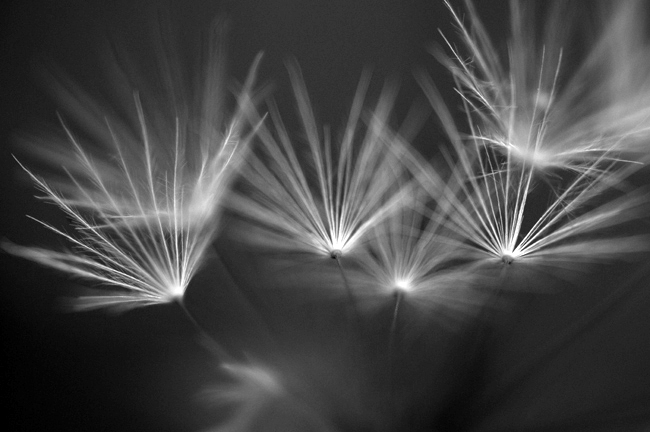
New camera technologies are coming at us all the time. These new technologies are taking over the image making process. Technology, that gives anyone the ability to take a bad photograph and using the new technology, make that image a decent image.
The latest one that caught my eye was this box camera that can focus an image even though the photographer didn't focus the subject properly. It got me thinking about learning the craft of photography, reading and looking at the masters of the craft and being inspired to create your own personal images.
I learned photography from the bottom up. Taking darkroom classes in black and white, rolling our own film and developing the film and printing the negatives. We learned about exposure and contrast and how you could underexpose and overexpose your film by varying your times in the developer. This worked well if you had a very contrasty scene and needed to back off from the deep shadows and bright highlights. You simple wouldn't develop the film as long.
We learned the Zone System created by Ansel Adams. The meter averaged everything to an 18% gray, therefore if you were shooting a subject that was bright you would have to adjust your exposure so those bright areas of your image didn't get dark and muddy looking. To bring up those highlights that you saw through your lens you would have to overexpose the negative/slide but not so far as to lose the highlight detail.
We learned the camera controls before everything went Auto mode. It was Eye/Hand coordination as you photographed fast paced action subjects. You practiced which way you should turn the lens depending on whether the subject was moving away from you or toward you. You used a tripod and set up your composition carefully and deliberately. We learned composition and lighting. We learned the business side of making pictures and then selling them to make a good living.
Now cameras are getting to the point where they can virtually take a picture for you without you being present in the scene and aware of your composition and exposure. The mantra now is take the photo and enhance it after the fact. You can correct exposure by new HD merge technology. You can photoshop out any detail you shouldn't have included in the frame. If you didn't like the color you can filter it to be anything you like.
Everyone is a photographer nowadays and they proliferate the internet with subjects of internal revelations, as if they are showing the world an important event, a plate of eaten vegetables. When everything is important then nothing is and we see the minutia of daily life, the mundane details of our existence raised to the level of significance that lowers our expectations of what quality subjects should be.
But there still is a way of seeing that is unique to you, and finding that vision only expands your ability and willingness to learn and grow as a photographer and as a person. It has nothing to do with technology, but your inner landscape being manifested.
Once you learn the craft of photography, then you can break the rules and use these emerging technologies to your advantage, not letting the technology use you. Adding new techniques that enhance your style and helps you express your vision is a good thing, and the new software out there can do that, but you have to be careful and not let this new technology interfere with the meaning behind your images. Special effects for its own sake usually leads to a shallow perception of the photographs you are making.
Look at new technologies in the film industry and the special effects they can do now. The book series by J.R.R. Tolkein "Lord of the Rings" was great, but to bring it to the big screen, as Peter Jackson did, took time for technology to catch up with the human imagination. Same with photography. Learn your craft and then use these emerging technologies to enhance your imagination and make authentic images and not bland, sterile, automated, assembly line copycat images.
Monday, February 20, 2012
WestPort along the Washington Coast
February 20, 2012
Last summer I went on vacation at Westport. It was great to build fires at sunset in the fire pit and sit around and talk and enjoy the peace and quiet at the cottage we rented. When you are a photographer are you really on a vacation time-out from creating imagery. I don't think that is possible. So holding to my nature as a photographer I created images as we visited different locations around Westport. I think my family knows, that even though we are on vacation, I will be shooting imagery and yes they will have to sometimes participate in a concept image that presents itself to me.
Saturday, February 4, 2012
Social Media Eating Away at Your Creativity
February 4, 2012
I feel like I am being consumed by social media and losing valuable time running my Photography Business. Time is short, and getting caught up on all the ways to promote yourself, keep in touch with every friend and acquaintance you had in High school, College, past business partners, past co-workers etc.. How can you live your life now in the present and create great imagery and focus on what is truly important to you and your photography if you spend all this time with Social Media Consumerism? The more friends you link to, the better you feel. More and more I see people using their cell phones to check in on their lives rather than looking up and seeing the physical world there in front of them and interacting with that rather than a window into cyber space. How many apps you have on your cell phone is becoming the "how big is your lens in your bag?" debate, meaningless. All these things distract you from your purpose, your goal of making great imagery. What this new technology does is allow you to play at photography and not really do it. Photography is something you do after you play with the newest, greatest app on your hi-tech phone.
Time is too short and it gets shorter as you get older, so I will use Social Media to promote my photography but will not allow Social Media to become the purpose of why I take photos. I will find what works for me and gives me the best time to do what I love to do, take photos. I will focus on my strengths and concentrate on a routine using Social Media as a means to and end and not an end in itself. Technology, if not used properly will destroy your energy to create.
I feel like I am being consumed by social media and losing valuable time running my Photography Business. Time is short, and getting caught up on all the ways to promote yourself, keep in touch with every friend and acquaintance you had in High school, College, past business partners, past co-workers etc.. How can you live your life now in the present and create great imagery and focus on what is truly important to you and your photography if you spend all this time with Social Media Consumerism? The more friends you link to, the better you feel. More and more I see people using their cell phones to check in on their lives rather than looking up and seeing the physical world there in front of them and interacting with that rather than a window into cyber space. How many apps you have on your cell phone is becoming the "how big is your lens in your bag?" debate, meaningless. All these things distract you from your purpose, your goal of making great imagery. What this new technology does is allow you to play at photography and not really do it. Photography is something you do after you play with the newest, greatest app on your hi-tech phone.
Time is too short and it gets shorter as you get older, so I will use Social Media to promote my photography but will not allow Social Media to become the purpose of why I take photos. I will find what works for me and gives me the best time to do what I love to do, take photos. I will focus on my strengths and concentrate on a routine using Social Media as a means to and end and not an end in itself. Technology, if not used properly will destroy your energy to create.
Saturday, January 21, 2012
Monument Valley
January 21, 2012
I was scanning some older images today and came across some images of Monument Valley I took years ago. A photographer friend, who had been through the area, gave me a guided tour of the many amazing landscapes and must see locations in Arizona.
Saturday, January 14, 2012
Can Personal Images Sell?
January 14, 2012
Can your images appeal to a small audience and still sell as Stock Imagery? How personal do your images have to be before they lose an audience and potential sales? I think any image can sell in this crazy stock photography world where Eye Catching images can be a powerful force in creating a name and brand for a product or company. I believe an image can appeal to a buying audience if it hits a chord of truth with the viewer, resonates with some emotion the viewer has and you have anchored your audience to your subject. If a viewer can relate a similar or shared experience with your photo whether it is an abstract image or documentary image then you have a good chance to sell that image.
If you really think about it there really isn't any image you shoot that isn't personal. You choose your subject, (something must of struck a chord with you to be attracted to that subject in the first place) you choose a composition (your personal perspective) and you focus your lens on a particular detail of the scene that drew your attention to it. All of these things come from the inside out, your history, experience and worldly knowledge. Whether you are a documentary, commercial, editorial photographer you are still shooting personal imagery.
Personal work then becomes a matter of degree. If you are shooting recognizable subjects and putting your own character into the final composition, lighting, lenses, exposure etc.. then that is personal work with a broader appeal than lets say a more personal shoot with an abstract/symbolic subject that is less defined and less likely to be read easily by a buyer and therefore would have a limited audience appeal. The latter would fit more into a fine art crowd audience that is looking for a more aesthetic interpretation of the subject. How much of yourself have you revealed in the image. If a buyer can feel your intense connection to your subject and through that truth he/she also experiences something similar to your experience then you have bridged your personal work with audience appeal.
Shooting personal work can take the pressure off you to shoot only what the market place is demanding. Producing imagery vs experiencing a photo journey, as you explore new subjects and interpret new paths that can lead you to something more rich and powerful in your knowledge as a human being and as a photographer. If you shoot what you love, have a deep interest in your subject then it shouldn't matter if it sells or not. If your images happen to sell to a broader clientele then OK, if not, so what you are shooting what you enjoy, so enjoy it.
Can your images appeal to a small audience and still sell as Stock Imagery? How personal do your images have to be before they lose an audience and potential sales? I think any image can sell in this crazy stock photography world where Eye Catching images can be a powerful force in creating a name and brand for a product or company. I believe an image can appeal to a buying audience if it hits a chord of truth with the viewer, resonates with some emotion the viewer has and you have anchored your audience to your subject. If a viewer can relate a similar or shared experience with your photo whether it is an abstract image or documentary image then you have a good chance to sell that image.
If you really think about it there really isn't any image you shoot that isn't personal. You choose your subject, (something must of struck a chord with you to be attracted to that subject in the first place) you choose a composition (your personal perspective) and you focus your lens on a particular detail of the scene that drew your attention to it. All of these things come from the inside out, your history, experience and worldly knowledge. Whether you are a documentary, commercial, editorial photographer you are still shooting personal imagery.
Personal work then becomes a matter of degree. If you are shooting recognizable subjects and putting your own character into the final composition, lighting, lenses, exposure etc.. then that is personal work with a broader appeal than lets say a more personal shoot with an abstract/symbolic subject that is less defined and less likely to be read easily by a buyer and therefore would have a limited audience appeal. The latter would fit more into a fine art crowd audience that is looking for a more aesthetic interpretation of the subject. How much of yourself have you revealed in the image. If a buyer can feel your intense connection to your subject and through that truth he/she also experiences something similar to your experience then you have bridged your personal work with audience appeal.
Shooting personal work can take the pressure off you to shoot only what the market place is demanding. Producing imagery vs experiencing a photo journey, as you explore new subjects and interpret new paths that can lead you to something more rich and powerful in your knowledge as a human being and as a photographer. If you shoot what you love, have a deep interest in your subject then it shouldn't matter if it sells or not. If your images happen to sell to a broader clientele then OK, if not, so what you are shooting what you enjoy, so enjoy it.
Monday, January 2, 2012
Shooting Waterfalls
January 2, 2012
Waterfalls are such a reflection of the beauty in nature that when we see them we automatically want to take pictures of them. We can shoot with fast shutter speeds, hand held and quickly and that works for a straight documentation of their beauty. But a better way to go is to take alittle more time to set up and frame the waterfall through good composition using a tripod. Using a tripod will slow your brain down and force you to look at the subject and decide where to shoot from that will give your image that extra quality that could make it a great photograph.
When shooting waterfalls in a forest setting, it is best to have a bright overcast day. This way the forest shadows are not too dark and the waterfalls reflective character too bright. Too much contrast can destroy your picture.
One tip I will always remember is when a photographer friend of mine said that I should try using a polarizing filter over my lens when shooting waterfalls or just forest settings in general. He said I would be impressed with how the greens would pop out and look rich and lush. So now, anytime I am shooting in a forest setting I always carry a polarizing filter and use it proficiently. A polarizing filter does not eliminate all reflected light, but only the light that is polarized, light waves which are oriented at one angle instead of several. You have to rotate a polarizing filter on the front of your lens to find the position which will eliminate the amount of polarized light you want removed. The polarizer blocks out some light so it will affect you exposure. So having those stray light reflections coming off the leaves eliminated (just as a polarizer eliminates the reflections from glass) and focusing the eye on the leaves rich texture is a good thing.
Because of the loss of light, depending on how much you rotate your polarizing filter, you will be using slower shutter speeds. This is what you want, because you will be using a tripod to hold your camera, a shutter release cable to trip the shutter bottom, and a time exposure to capture the water pouring over the rocks. If you don't have a cable release you can use the self timer control to take the picture so your finger won't move your camera during the long exposures.
If you have to much light and you find that you cannot use a slow enough shutter speed and you don't have a polarizer you can use a neutral density filter that will cut down on the light and you should be able to use slower shutter speed to get that beautiful fluid motion of a waterfall.
Waterfalls are such a reflection of the beauty in nature that when we see them we automatically want to take pictures of them. We can shoot with fast shutter speeds, hand held and quickly and that works for a straight documentation of their beauty. But a better way to go is to take alittle more time to set up and frame the waterfall through good composition using a tripod. Using a tripod will slow your brain down and force you to look at the subject and decide where to shoot from that will give your image that extra quality that could make it a great photograph.
When shooting waterfalls in a forest setting, it is best to have a bright overcast day. This way the forest shadows are not too dark and the waterfalls reflective character too bright. Too much contrast can destroy your picture.
One tip I will always remember is when a photographer friend of mine said that I should try using a polarizing filter over my lens when shooting waterfalls or just forest settings in general. He said I would be impressed with how the greens would pop out and look rich and lush. So now, anytime I am shooting in a forest setting I always carry a polarizing filter and use it proficiently. A polarizing filter does not eliminate all reflected light, but only the light that is polarized, light waves which are oriented at one angle instead of several. You have to rotate a polarizing filter on the front of your lens to find the position which will eliminate the amount of polarized light you want removed. The polarizer blocks out some light so it will affect you exposure. So having those stray light reflections coming off the leaves eliminated (just as a polarizer eliminates the reflections from glass) and focusing the eye on the leaves rich texture is a good thing.
Because of the loss of light, depending on how much you rotate your polarizing filter, you will be using slower shutter speeds. This is what you want, because you will be using a tripod to hold your camera, a shutter release cable to trip the shutter bottom, and a time exposure to capture the water pouring over the rocks. If you don't have a cable release you can use the self timer control to take the picture so your finger won't move your camera during the long exposures.
If you have to much light and you find that you cannot use a slow enough shutter speed and you don't have a polarizer you can use a neutral density filter that will cut down on the light and you should be able to use slower shutter speed to get that beautiful fluid motion of a waterfall.
Of course shooting waterfalls with fast shutter speeds works too.
Saturday, December 24, 2011
Saturday, December 10, 2011
Slow Shutter Speeds
December 10, 2011
I have a tendency to get in a rut and shoot a certain way just out of laziness. If it worked before and I got some good images then why change a thing. When I shoot action images I tend to want to get the subject sharp and that means using a fast shutter speed to stop the motion.
But why not think outside the box and try using different shutter speeds to see if you can create a more interesting image.
When shooting with slow shutter speeds try panning your camera as your subject moves by. When panning vary your shutter speed to fit the speed of your subject. This takes just a little practice to get the feel of how slow you should go in order to anchor your subject visually. Just keep your arms tucked close to your torso and relax and follow your subject.
Of course you will want to push the bounds of visual perception even more whereby everything in your frame is abstract.
I have a tendency to get in a rut and shoot a certain way just out of laziness. If it worked before and I got some good images then why change a thing. When I shoot action images I tend to want to get the subject sharp and that means using a fast shutter speed to stop the motion.
But why not think outside the box and try using different shutter speeds to see if you can create a more interesting image.
When shooting with slow shutter speeds try panning your camera as your subject moves by. When panning vary your shutter speed to fit the speed of your subject. This takes just a little practice to get the feel of how slow you should go in order to anchor your subject visually. Just keep your arms tucked close to your torso and relax and follow your subject.
Of course you will want to push the bounds of visual perception even more whereby everything in your frame is abstract.
Subscribe to:
Posts (Atom)


